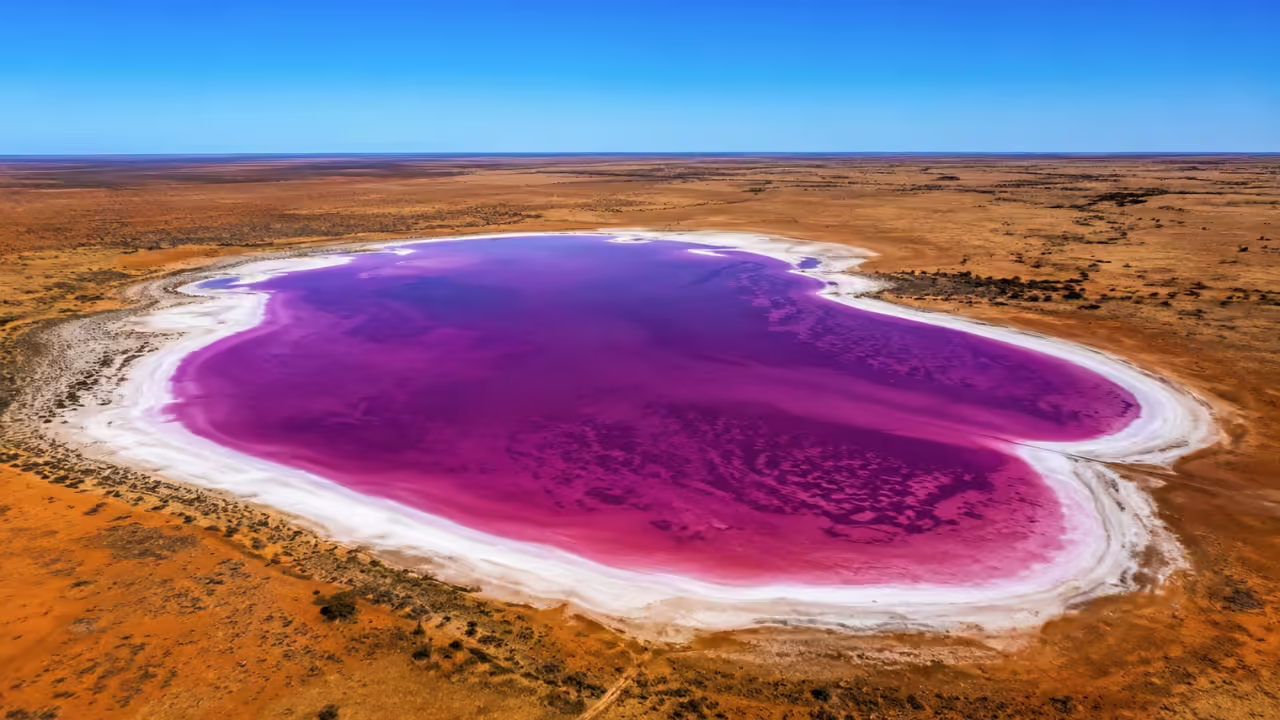
Australia pink lakes purple color shift is one of the most visually dramatic examples of microbiology at work anywhere on Earth – and this season, the transformation is more striking than ever. Scattered across the salt flats of Western Australia and South Australia lies a landscape that looks like it belongs on another planet – lakes of impossible bubblegum pink, deep magenta, and now, increasingly, a striking shade of purple that has visitors and scientists equally fascinated.
Australia’s pink lakes turning purple isn’t magic, paint, or pollution – it’s one of the most visually dramatic examples of microbiology at work anywhere on Earth. And the explanation behind it is far stranger, and far more fascinating, than most people expect.
A Landscape That Looks Photoshopped
Lakes like Hutt Lagoon on the Coral Coast, Lake Hillier near Esperance, and Lake Bumbunga in South Australia’s Clare Valley have become bucket-list destinations for travelers chasing surreal, otherworldly photos. From above, these lakes look less like natural bodies of water and more like something generated by a color filter – solid sheets of pink, rose, and deepening purple stretching across otherwise dry, dusty terrain.
What makes this season particularly striking is the intensity of the purple tones now visible across several of these lakes – a shift that, while dramatic to witness, is actually part of a completely natural and well-understood biological cycle.
The Real Cause: Life Too Small to See
Here’s the part that surprises most people: the color isn’t caused by minerals, chemicals, or anything in the water itself – it’s caused by living organisms. These lakes are extremely salty, often several times saltier than the ocean. That extreme salinity makes them nearly uninhabitable for most life forms, but a small handful of highly specialized organisms have evolved to thrive in exactly these brutal conditions. The two main culprits behind the color are:
Dunaliella salina – a microscopic algae species that has adapted to survive in hypersaline environments. Under normal conditions, this algae can appear relatively colorless or pale green. But under intense sunlight and high-salt stress, it produces large amounts of a red-orange pigment called beta-carotene – the same compound that gives carrots their color – as a natural defense mechanism against UV damage.
Halophilic bacteria – salt-loving microorganisms that produce their own reddish-purple pigments, called carotenoids, allowing them to survive in salt concentrations that would kill almost any other organism on the planet.
When these two organisms exist together in large enough populations, their combined pigments can shift a lake’s color from pale pink toward a deeper reddish-purple – which is exactly the transformation now visible across several of Australia’s most famous salt lakes.
Why the Color Intensifies at Certain Times
If these organisms are always present in the water, why do the lakes shift color instead of staying one consistent shade year-round?The answer lies in the relationship between heat, salinity, and microbial population growth.
During warmer months, water evaporates faster, which concentrates the salt levels in these already-salty lakes even further. Higher salinity creates even more extreme conditions – and paradoxically, that’s exactly when Dunaliella salina and halophilic bacteria thrive the most. Under this kind of environmental stress, both organisms ramp up pigment production dramatically, intensifying the lake’s color from a soft pastel pink into a much deeper, richer hue.
Sunlight plays a critical role too. Intense UV exposure during hotter seasons pushes the algae to produce even more protective pigment, which is part of why these color shifts tend to become most vivid during peak heat periods rather than staying constant throughout the year. Add in factors like wind patterns, water depth changes, and mineral concentration shifts, and you get a lake that can visibly change shade not just season to season, but sometimes even day to day.
Nature’s Own Color-Changing Experiment
What’s remarkable about this phenomenon is how sensitive these microorganisms are to their environment. In many ways, these lakes function as natural indicators of environmental conditions – subtle shifts in temperature, rainfall, and salinity show up almost immediately as visible changes in color.
Scientists studying these lakes have noted that this sensitivity works both ways. In some cases, environmental changes have caused certain pink lakes to lose their color entirely. Western Australia’s original “Pink Lake” near Esperance famously turned blue-gray after mining activity altered the water’s salt balance, allowing different, non-pigmented organisms to take over. It’s a clear demonstration of just how fragile – and how directly tied to microscopic life – these dramatic colors really are.
A Global Rarity Hiding in Plain Sight
While a handful of hypersaline pink lakes exist around the world, Australia has one of the highest concentrations of them on the planet, with the Esperance region alone home to well over 100 salt lakes displaying shades ranging from pale pink to deep magenta and purple.
This isn’t just a tourist curiosity – it’s also valuable to science. Dunaliella salina, the algae responsible for much of the color, is actually harvested commercially in some parts of the world for its beta-carotene content, used in food coloring, vitamin A supplements, and cosmetics. The same pigment responsible for turning an entire lake vivid pink is quite literally used in products found in ordinary supermarkets and pharmacies.
Why This Matters Beyond the Photos
It’s easy to see a purple lake and simply chase the perfect photo, but this phenomenon is really a visible window into an invisible ecosystem – one built entirely around organisms too small to see individually, yet powerful enough to color an entire landscape when their populations align with the right seasonal conditions.
It’s also a quiet reminder of how interconnected environmental factors truly are. A shift in temperature, a change in salinity, a difference in sunlight intensity – each one, on its own, seems minor. But together, they’re capable of transforming an entire lake’s appearance almost overnight.
Final Thoughts
The purple hues now spreading across Australia’s pink lakes aren’t the result of pollution, dye, or any human interference – they’re a natural, living response from microorganisms perfectly adapted to one of the harshest environments on Earth. As temperatures shift and salinity intensifies with the season, these tiny life forms respond in the most visible way possible, turning entire lakes into a shifting canvas of pink, red, and deep purple.
It’s proof that some of nature’s most stunning visual displays aren’t caused by geology or weather alone – sometimes, they’re painted by life itself, one microscopic organism at a time.