Two fighters trade punches for three straight minutes, the crowd roars, and when the bell rings, three people sitting ringside somehow have to compress all of that chaos into a single, clean number. That’s the job of boxing’s 10-point must system, the scoring framework behind virtually every professional decision in the sport. It sounds simple on paper. In practice, it involves a surprisingly detailed set of judgment calls that most casual fans watching at home never fully learn to see.
The Basic Math Behind Every Round
The system’s core mechanic is genuinely simple. Every round begins at an even 10-10. When the bell rings to end it, the round’s winner is awarded 10 points, while the loser typically receives 9. At the end of the fight, three independent ringside judges add up their scorecards, and the outcome gets classified as a unanimous decision (all three judges agree), a split decision (judges disagree on the winner), or a majority decision (two judges pick the same winner while one scores it even).
Knockdowns change the math directly. A fighter dropped during a round typically costs their opponent’s scorecard an extra point, turning a standard round into a 10-8. Two knockdowns in the same round can push it to 10-7, and in rare cases, a round can be scored 10-8 even without a knockdown if one fighter’s overall dominance is considered overwhelming enough to justify it.
Why This System Is Far Less Objective Than It Looks
Here’s what makes boxing scoring genuinely complicated: unlike counting goals in soccer or points in tennis, judges aren’t tallying anything as concrete as a scoreboard. Instead, they’re weighing performance against four official criteria, listed here in order of how heavily they typically influence a judge’s decision.
Criterion One: Clean Punching
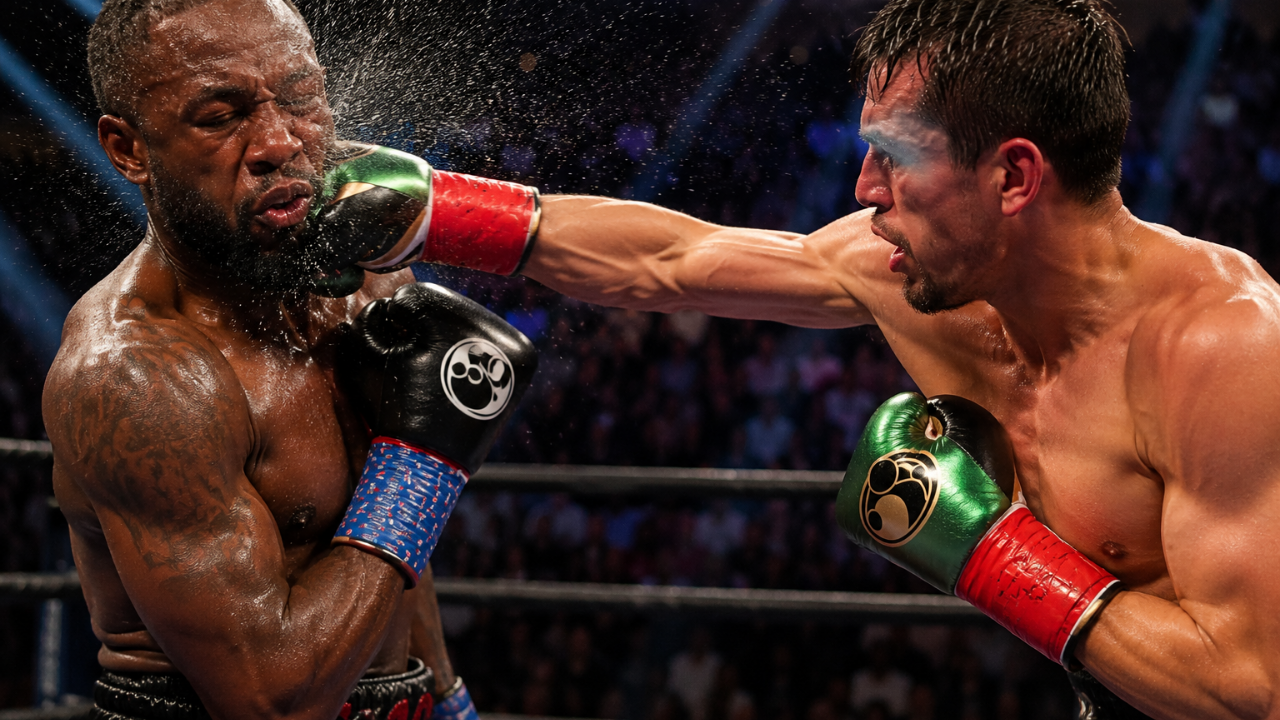
This is, by a meaningful margin, the most heavily weighted factor in the entire system. Judges are specifically trained to reward quality over quantity, meaning a fighter landing 15 sharp, accurate, legal punches will almost always outscore an opponent who throws 50 punches but only connects cleanly with 20 of them. A legal punch has to land with the knuckle portion of the glove, directly on a scoring target area like the head or torso. Punches that get blocked, land on gloves or forearms, or barely graze an opponent generally count for nothing.
This single criterion explains a phenomenon that frustrates casual fans regularly: a technically precise counter-puncher who appears to be doing “less” throughout a round can still win decisively on the scorecards, purely because their limited output was significantly more accurate and damaging than their busier opponent’s.
Criterion Two: Effective Aggressiveness
This criterion frequently gets misunderstood by newer fans, largely because of one small but critical word: effective. Simply walking forward, pressing an opponent, and throwing a high volume of punches earns absolutely nothing on its own if those punches are missing, getting blocked, or getting countered cleanly by the retreating fighter.
For aggression to actually score points, it has to produce results. A fighter marching forward and landing meaningful shots gets rewarded here. A fighter marching forward while walking directly into counter-punches, despite technically being “the aggressor,” typically gets nothing, and can even lose the round to the counter-puncher who was doing the more effective work while appearing to retreat.
Criterion Three: Ring Generalship
This criterion measures something considerably harder to quantify: tactical control. It rewards the fighter who dictates where the action happens, controls the pace and distance of the fight, and forces their opponent to fight on their terms rather than the other way around. A boxer using sharp footwork, feints, and positioning to consistently put their opponent off balance, even without necessarily landing the flashiest punches, is demonstrating ring generalship.
This particular criterion becomes especially important in close, evenly contested rounds, sometimes called “swing rounds,” where neither fighter clearly dominates through clean punching alone. When judges struggle to separate two fighters on output, ring generalship frequently becomes the deciding factor tipping the round one way or the other.
Criterion Four: Defense
Defense sits last among the four criteria, and for good reason: a fighter cannot win a round through defense alone, no matter how untouchable they appear. Slipping, blocking, and evading punches only earns credit for a judge’s scorecard when it’s paired with effective counter-punching. A fighter who spends three minutes successfully avoiding every punch thrown at them, without landing anything meaningful in return, will typically still lose that round on the cards, because avoiding damage isn’t the same as winning an exchange.
How These Four Criteria Actually Change a Score in Practice
Consider a hypothetical round where Fighter A throws significantly more punches and appears more active on television, while Fighter B lands fewer but noticeably harder, cleaner shots and controls the center of the ring through smart footwork. Despite looking “busier” on screen, Fighter A may well lose that round, because clean punching and ring generalship, the two more heavily weighted criteria, both favor Fighter B.
Now imagine a round where one fighter lands a single overwhelming combination that visibly staggers their opponent without producing an actual knockdown. Depending on how dominant that sequence appeared relative to the rest of the round, a judge has discretion to score it a 10-8 rather than the standard 10-9, purely based on the sheer gap in effective output, even with no fighter hitting the canvas. This is also where point deductions enter the picture separately from the four scoring criteria: a referee can instruct judges to subtract a point for fouls like low blows, headbutts, or repeated holding, a penalty applied on top of whatever the round’s performance-based score would have otherwise been.
Why Fans and Judges So Often Disagree
Understanding these four criteria explains why boxing decisions frequently spark genuine controversy, even among people who watched the exact same round. Because three of the four criteria, effective aggressiveness, ring generalship, and defense, all require subjective interpretation rather than simple counting, two reasonable judges can watch identical footage and walk away with entirely different conclusions about who actually won.
That built-in subjectivity isn’t a flaw in the system so much as an unavoidable consequence of trying to score a sport built on strategy, timing, and physical dominance rather than clearly countable outcomes like goals or baskets. Once you understand what judges are actually watching for, clean punching first, effective aggression second, ring control third, defense last, close rounds stop feeling arbitrary and start looking like exactly what they are: careful, if imperfect, attempts to measure genuine dominance inside a genuinely chaotic three minutes.