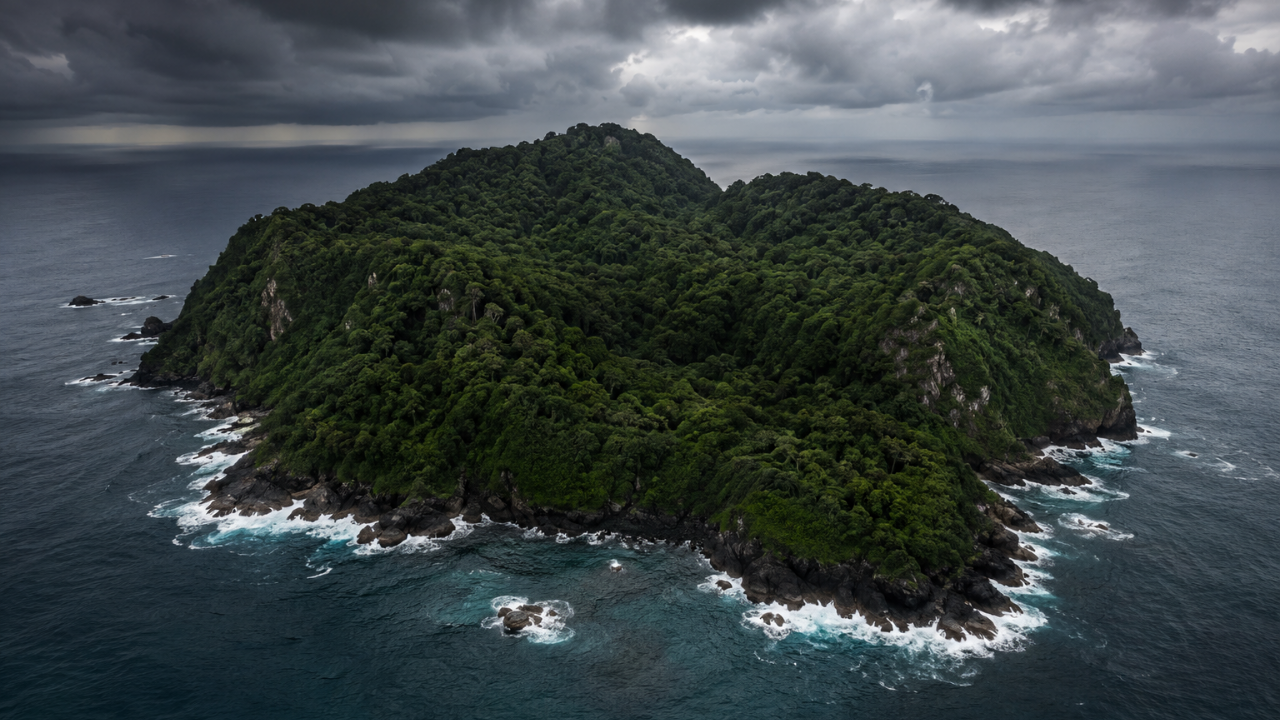
Snake Island Brazil is considered one of the most dangerous places on Earth. Located off the coast of Brazil, this isolated island is home to thousands of venomous golden lancehead snakes, making it one of the few places where humans are legally restricted from visiting.
A Small Island With an Enormous Problem
At just 43 hectares, roughly the size of a modest city park, Queimada Grande isn’t an intimidating landmass. What makes it genuinely dangerous is invisible from a distance: an estimated 2,000 to 4,000 venomous snakes live within its lowland forest canopy, concentrated into just a fraction of the island’s total area. Depending on which patch of forest you’re standing in, researchers estimate there can be as many as one to five snakes per square meter, a density almost impossible to find anywhere else on the planet.
These aren’t ordinary snakes, either. The island is the only natural habitat on Earth for the golden lancehead pit viper (Bothrops insularis), a species that exists nowhere else, found on no other island, no mainland forest, nowhere. It is, quite literally, a species with a single, tiny, forbidden home.
A Snake Built by Isolation
The golden lancehead’s story begins roughly 11,000 years ago, at the end of the last Ice Age, when rising sea levels slowly severed this piece of land from mainland Brazil. Whatever snakes happened to be living there at the time were suddenly trapped, cut off from the mainland gene pool and left to adapt to an entirely new, isolated environment with no way back.
With no ground-level predators to worry about, but no easy access to prey either, the trapped snake population evolved to solve a very specific problem: catching birds. Most of the island’s available prey consists of migratory seabirds that land in the canopy to rest during long journeys. Unlike prey on the ground, a wounded bird can simply fly away before a snake’s venom has time to work, unless that venom is fast enough to guarantee an almost instant kill.
Over thousands of years of isolated evolution, that pressure produced venom three to five times more potent than that of the golden lancehead’s closest mainland relatives, capable of causing severe internal bleeding, rapid tissue damage, and organ failure in anything unlucky enough to be bitten.
Why the Government Stepped In
Recognizing just how dangerous this combination of density and potency had become, the Brazilian Navy formally closed the island to civilians in the 1920s, a restriction that has remained in place, essentially unchanged, for roughly a century. Today, the only people permitted to set foot on Queimada Grande are research scientists operating under strict federal permits, typically accompanied by a doctor and traveling with appropriate protective equipment.
There are no confirmed, documented cases of a golden lancehead killing a visitor, largely because almost no one has been allowed close enough to test that outcome in the first place. Local fishing communities near the coast tell older, unverified stories about lighthouse keepers and lost sailors, but nothing officially confirmed exists. In a strange way, the island’s fearsome reputation is partly built on precisely how effectively humans have simply stayed away from it.
A Rare Kind of Conservation Story
What makes Queimada Grande particularly interesting isn’t just the danger, it’s the reasoning behind the restriction. Most forbidden or restricted locations around the world exist to protect fragile ecosystems, ancient ruins, or endangered species from human interference. This island flips that logic almost entirely. The ban exists just as much to protect the snakes from us as it does to protect people from the snakes.
The golden lancehead is officially classified as critically endangered, a genuine paradox for a species so numerous within its own tiny habitat that the island can’t safely support human visitors. Its entire global population exists on this one patch of forest, nowhere else, meaning any significant disturbance, whether from illegal wildlife trafficking, habitat destruction, or simple human interference, could threaten the survival of the species entirely.
What the Island Actually Represents
There’s something quietly remarkable about a place where an entire nation has decided the safest, most responsible decision is simply to leave it alone. No infrastructure, no development, no attempt to tame or monetize it into a tourist attraction. Just a formal, century-old legal boundary, respected largely because breaking it carries genuine, serious risk.
Snake Island isn’t dangerous because of some myth or exaggeration. It’s dangerous because a very specific, very rare set of evolutionary circumstances created a concentration of venomous predators unlike almost anywhere else on Earth, and because the government that oversees it decided, wisely, that some places are better left entirely to whatever already lives there.