
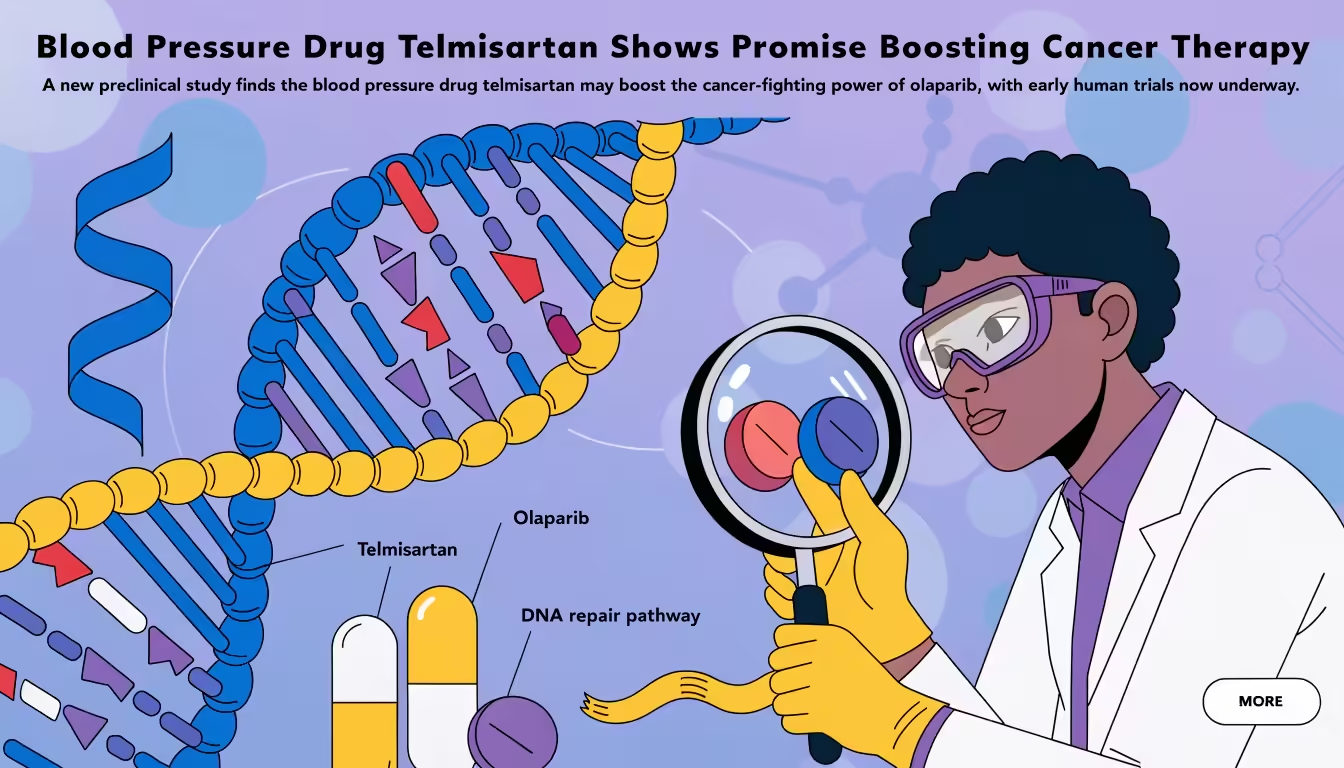
A new telmisartan cancer treatment study from Dartmouth Cancer Center has found that the widely used, inexpensive blood pressure drug can significantly boost the effectiveness of olaparib, a targeted cancer therapy, potentially widening its benefits to patients who would not normally respond to it. The findings, published in the Journal for ImmunoTherapy of Cancer, are based on laboratory and preclinical research, and the combination is now being tested in early-stage human clinical trials.
It’s important to be precise about where the science currently stands: this is not yet a proven cancer treatment available to patients. It is a promising early discovery, now moving carefully into human testing, that has excited oncology researchers because of how common, cheap and well-tolerated telmisartan already is.
Key Facts
- Researchers at Dartmouth Cancer Center found that telmisartan, an FDA-approved blood pressure medication, significantly increased the cancer-killing activity of olaparib in preclinical experiments.
- Olaparib belongs to a class of drugs called PARP inhibitors, which normally work best in tumors with BRCA-related DNA repair defects.
- The combination showed effects even in tumors that lack those BRCA-related defects, a group that current PARP inhibitors typically cannot help.
- Two early-phase human clinical trials are already underway, one in metastatic prostate cancer and one in platinum-resistant ovarian cancer.
- The findings are preclinical and early-trial in nature; the combination is not an approved or standard cancer treatment at this time.
What Happened
Olaparib is part of a group of targeted cancer therapies known as PARP inhibitors, which exploit weaknesses in how certain cancer cells repair damaged DNA. These drugs work especially well in tumors linked to BRCA1 or BRCA2 gene mutations, but many cancers lack these specific defects, leaving a large share of patients unable to benefit. Even patients who do respond well initially can develop resistance to the drug over time.
The Dartmouth team, led by senior author Dr. Tyler J. Curiel, set out to see whether pairing olaparib with other existing drugs could extend its usefulness. In laboratory experiments, they found that telmisartan increased DNA damage inside cancer cells when combined with olaparib, and also triggered stronger immune responses, including higher production of type I interferons, signaling molecules that help the immune system detect and attack tumors. The combination also lowered levels of PD-L1, a protein many cancers use to hide from immune attack.
Notably, the researchers tested telmisartan against other drugs in the same angiotensin II receptor blocker (ARB) class, commonly used to treat high blood pressure, and found that its cancer-fighting effect appeared to be unique to telmisartan rather than a general property of the drug class.
Because telmisartan is an oral medication with a long safety record, including in people without high blood pressure, the Dartmouth team moved quickly to begin testing the combination in patients. One trial is evaluating telmisartan plus olaparib in men with metastatic, castration-resistant prostate cancer; researchers reported that the first participant had a notably strong response. A second trial recently enrolled its first patient with platinum-resistant ovarian cancer. Both trials remain in early stages, and their results have not yet been published or peer-reviewed.
Why It Matters
If the early signals hold up in larger, controlled clinical trials, this kind of drug repurposing could be significant for a straightforward reason: telmisartan is already inexpensive, widely available, and well understood by regulators and physicians, which could allow any confirmed benefit to reach patients faster than an entirely new drug would. Repurposing existing, generic medications for new uses also tends to be far less expensive to develop than novel compounds, an important consideration for health systems and lower-income countries where the cost of advanced cancer drugs is often a major barrier to access.
That said, the distance between a promising laboratory finding and a proven, widely available treatment is often long. Many combinations that look effective in preclinical models fail to show the same benefit, or reveal new safety concerns, once tested in large clinical trials.
Impact on the United States
For American patients and oncologists, the study adds to a growing interest in combining existing, low-cost drugs with newer targeted therapies to expand their reach. Given that a large share of the U.S. population already takes blood pressure medications, any confirmed cancer benefit from a specific drug like telmisartan could eventually influence prescribing decisions, though that would only follow successful completion of clinical trials.
Impact on the United Kingdom
NHS oncology teams, which operate under close cost scrutiny, are likely to watch trial results closely given telmisartan’s low cost relative to newer cancer therapies. Drug repurposing findings like this one are of particular interest to health systems built around centralized cost-effectiveness reviews, since an inexpensive addition to an existing approved therapy could, if proven effective, be adopted more quickly than a brand-new compound.
Impact on Canada
Health Canada and provincial oncology programs are expected to monitor the ongoing U.S. clinical trials as part of standard surveillance of promising cancer research developments. As with any early-stage finding, Canadian regulators would require robust trial data, including safety and efficacy results from larger patient groups, before any change to treatment guidelines could be considered.
Expert Analysis
Dr. Curiel, the study’s senior author, described telmisartan as a common, safe, tolerable and inexpensive drug that may meaningfully improve how well an important class of cancer therapies works. He also noted that his team has separate data suggesting telmisartan may improve the effectiveness of other chemotherapy and immunotherapy drugs across different cancer types through related biological mechanisms, though those findings extend beyond the scope of this particular study.
Independent oncologists not involved in the research have not yet issued published commentary on these specific findings, since the paper was released only this week. As is standard for early-phase combination trials, independent experts would typically want to see results from larger, randomized trials before drawing firm conclusions about clinical benefit.
Frequently Asked Questions
Is telmisartan an approved cancer treatment? No. Telmisartan is approved to treat high blood pressure. Its use alongside olaparib for cancer is experimental and currently being studied in early-phase clinical trials only.
Should cancer patients ask their doctor about taking telmisartan? Patients interested in this research should discuss it with their oncologist, who can advise whether a clinical trial might be appropriate. This is not a treatment recommendation, and patients should not add or change any medication without medical supervision.
What is olaparib normally used for? Olaparib is a PARP inhibitor used to treat certain cancers, particularly those linked to BRCA1 or BRCA2 gene mutations, including some breast, ovarian, prostate and pancreatic cancers.
Why does this combination help patients without BRCA mutations? Preclinical research suggests telmisartan increases DNA damage in tumor cells and boosts immune signaling in ways that may make cancers more sensitive to olaparib, even without the DNA repair defects the drug typically relies on.
When might this treatment be available more widely? That depends on the outcome of ongoing and future clinical trials. Early-phase trials, followed by larger studies, typically take years before any treatment combination could be reviewed for regulatory approval.
What Happens Next
The two ongoing clinical trials, in prostate and ovarian cancer, will need to enroll more patients and report structured results before any conclusions about clinical benefit can be drawn. If early results remain promising, researchers would likely pursue larger randomized trials to confirm both safety and effectiveness across broader patient populations. Curiel’s team has also indicated interest in exploring telmisartan’s effects alongside other chemotherapy and immunotherapy classes, suggesting further studies may follow regardless of how the current trials conclude.
Conclusion
The Dartmouth Cancer Center findings on telmisartan and olaparib represent an encouraging, if early, step in the broader effort to make existing PARP inhibitor therapies useful for more cancer patients, including those without BRCA-related mutations. This telmisartan cancer treatment study is grounded in solid preclinical science and has already advanced into early human trials, but it remains a research finding rather than an approved treatment. Patients and families following this story should treat it as a reason for cautious optimism, not a signal to change treatment plans without medical guidance.
Stay informed with SultanNetwork.online for verified coverage of global news, business, finance, technology, science, and world affairs.