
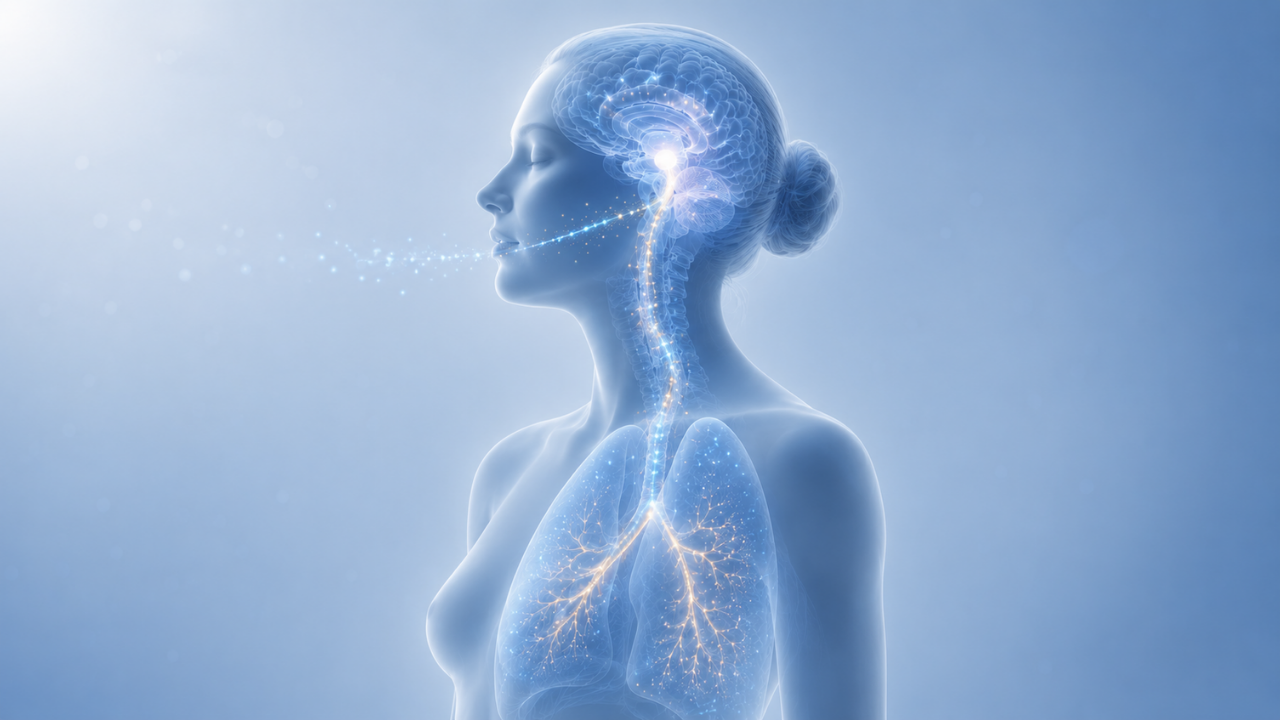
Take a breath right now, and exhale slowly, longer than you inhaled. Something genuinely measurable just happened inside your body, not a vague sense of calm, but an actual chemical shift in your blood and a direct signal sent to your brain stem. Slow breathing isn’t a metaphor for relaxation. It’s a mechanical process with real biochemistry behind it, and understanding how it works reveals something surprising about how much control you actually have over your own stress response.
The Nerve That Runs the Whole Show
At the center of this process sits the vagus nerve, the longest cranial nerve in the human body, running from the brain stem down through the chest and into the abdomen. This nerve controls what’s known as the parasympathetic nervous system, the body’s built-in “calm down” mechanism responsible for slowing the heart rate, lowering blood pressure, and halting the cascade of stress hormones once a threat has passed.
Here’s the part most people don’t realize: the vagus nerve isn’t equally active throughout your entire breathing cycle. It becomes significantly more active specifically during exhalation. Every time you breathe out, the vagus nerve releases a chemical messenger called acetylcholine, which dilates blood vessels and slows the heart rate. During inhalation, by contrast, the sympathetic nervous system, the “alert” system, briefly takes over instead.
This means the ratio between how long you inhale versus how long you exhale isn’t just a breathing technique detail. It’s directly determining which nervous system is dominant at any given moment.
Why the Exhale Is Doing the Real Work
If exhaling triggers more vagal activity than inhaling, it logically follows that spending more time exhaling than inhaling should tip your entire nervous system toward a calmer state. Research on this exact mechanism backs it up. Breathing patterns where the exhale is deliberately longer than the inhale, techniques like inhaling for four seconds and exhaling for six or eight, have been shown to increase what scientists call vagal tone and reduce activity in the sympathetic, stress-driving half of the nervous system.
This isn’t a slow, abstract process either. Studies on heart rate variability, a direct physiological marker of nervous system balance, show measurable shifts occurring within minutes of practicing extended-exhale breathing.
The Blood Chemistry Nobody Talks About
Here’s where the story moves from nerve signaling into genuine biochemistry. When you breathe slowly, carbon dioxide builds up slightly in your bloodstream between breaths. That buildup isn’t a bad thing, in fact, it’s a critical part of the mechanism. Rising CO2 levels make the vagus nerve more sensitive and responsive, further reinforcing the calming signal already being triggered by the longer exhale.
This CO2 shift also has a direct relationship with blood pH. The brain stem contains specialized chemoreceptor cells specifically designed to monitor blood pH and carbon dioxide levels moment to moment. When breathing slows and CO2 rises slightly, these brain stem sensors detect the chemical shift and adjust the body’s physiological state accordingly, part of the same feedback loop that governs breathing rate, heart rate, and stress hormone output. It’s a real-time chemical conversation happening between your lungs, your bloodstream, and the base of your brain, entirely outside conscious awareness.
Fast, shallow breathing produces the opposite chemical signature: it can lower carbon dioxide levels in the blood too quickly, a state that’s actually associated with symptoms of panic and anxiety, rather than relief from them. In other words, hyperventilating during a stressful moment doesn’t just feel unhelpful, it may be chemically reinforcing the exact stress state a person is trying to escape.
Where Cortisol Comes Into the Picture
Cortisol, often labeled simply as “the stress hormone,” is more accurately understood as a regulator of alertness and energy that naturally rises in the morning and gradually declines throughout the day. Problems emerge when cortisol stays elevated for extended periods due to chronic stress, contributing to poor sleep, impaired recovery, and long-term health strain.
Breathing patterns directly influence this hormonal picture. Fast, erratic breathing tends to reinforce a physiological stress state that can help keep cortisol elevated. Slow, rhythmic breathing, particularly when practiced consistently over time, has been shown in research to reduce measurable stress markers and help regulate cortisol back toward a healthier baseline, not through willpower or mindset alone, but through the direct mechanical and chemical pathway described above.
A Body-Level Explanation, Not Just a Mental One
What makes this particular mechanism interesting is how little it actually depends on mindset or belief. You don’t need to meditate, visualize calm, or think positive thoughts for this system to function. The mechanism works at the level of nerve signaling and blood chemistry, meaning it operates whether or not you consciously believe it will help.
This is part of why extended-exhale breathing techniques have found genuine traction in clinical and medical research settings, not just wellness culture. Slow-paced breathing with a prolonged exhale has been studied in contexts ranging from anxiety management to inflammatory conditions, precisely because the underlying mechanism, vagal activation through extended exhalation, is measurable and repeatable rather than purely subjective.
The Simplicity Behind the Science
Strip away the wellness branding and guided meditation apps, and what remains is a strikingly simple mechanical fact: the length of your exhale relative to your inhale changes which half of your nervous system is dominant, alters the chemical composition of your blood, and sends a direct signal to chemoreceptors sitting in your brain stem. None of this requires special equipment, training, or belief.
It’s a reminder that some of the most effective tools for managing stress aren’t philosophical concepts at all. They’re mechanical processes, built directly into human physiology, waiting to be used by anyone willing to simply slow down their next exhale.