
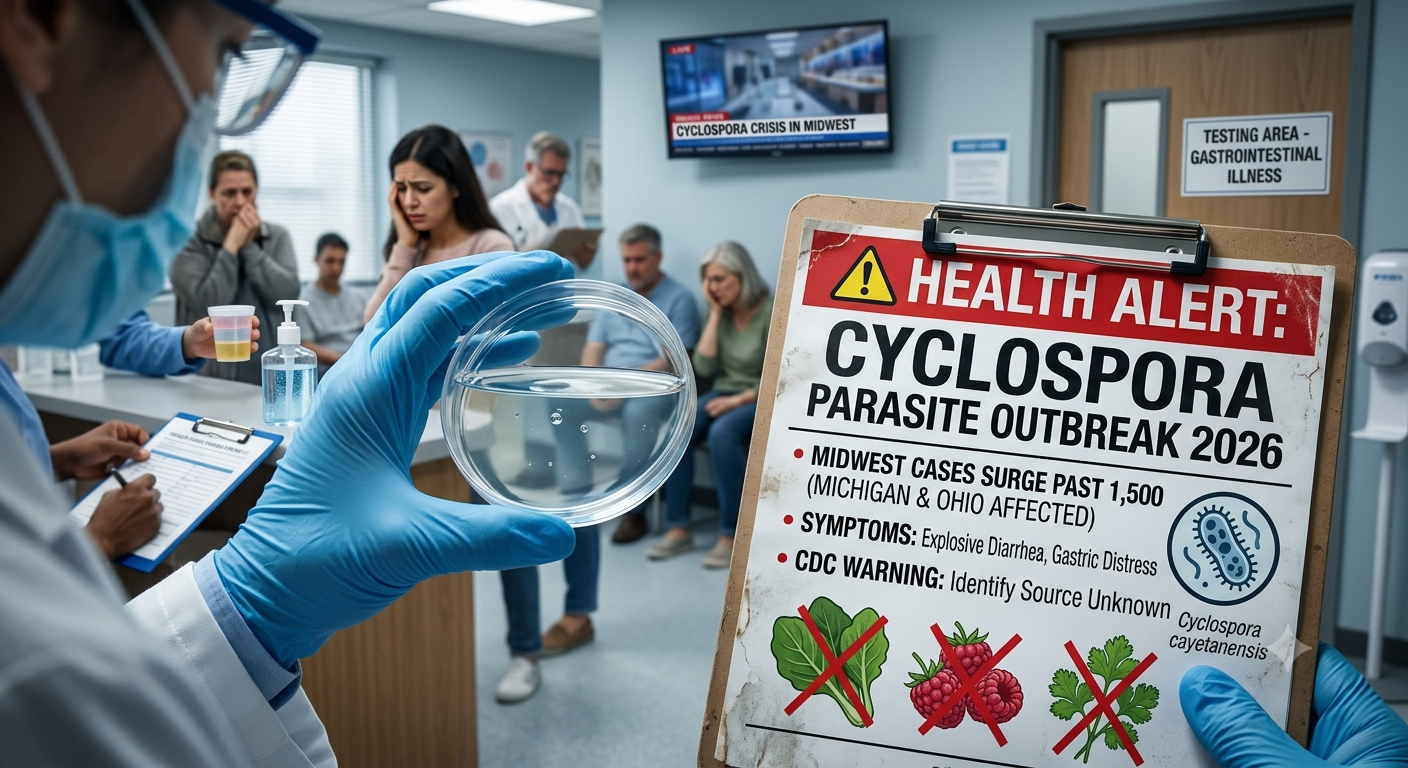
The Cyclospora parasite outbreak 2026 has officially escalated into a massive public health crisis across the United States. Within the last 48 hours, reported infections have more than doubled, sending shockwaves through public health agencies, commercial kitchens, and local communities alike. With the exact source of the contamination still completely unknown, this dangerous situation has triggered international travel warnings and put cross-border agricultural supply chains on high alert.
Medical teams and epidemiologists are working around the clock, but the sheer speed at which new cases are emerging suggests that the current numbers might only be the tip of the iceberg. As families panic and demand answers, the pressure on federal food safety agencies is reaching an all-time high.
The Midwest Epicenter: Inside the Numbers
The scale of this sudden spike has completely overwhelmed state epidemiologists and regional tracking centers. Michigan is currently the hardest-hit epicenter of the Cyclospora parasite outbreak 2026, documenting an unprecedented 1,500+ confirmed cases within its borders alone. Neighboring Ohio is also reporting hundreds of infections, with numbers rising daily, while surrounding states are beginning to flag suspicious clusters of gastrointestinal illnesses.
Medical professionals and urgent care clinics across the affected regions are reporting a massive surge in patients presenting with severe, debilitating gastric distress. Because the incubation period for this specific parasite can last anywhere from a few days to several weeks, health officials fear the actual number of infected individuals is significantly higher. Many people may still be in the early stages of incubation, while others might be misdiagnosing their symptoms as a standard stomach flu or food poisoning, delaying crucial medical testing.
What is Cyclospora Cayetanensis? Understanding the Pathogen
Cyclospora cayetanensis is a microscopic, single-celled parasite that causes an intestinal illness known as cyclosporiasis. Unlike common bacterial food poisoning (like Salmonella or E. coli) that typically shows symptoms within a few hours of eating contaminated food, this parasite requires a specific timeline to develop inside the host’s digestive system.
The parasite is usually transmitted when a person ingests water or food that has been contaminated with infected feces. What makes Cyclospora particularly difficult to manage is that the immature oocysts (eggs) shed in feces require days or even weeks in the environment to become infectious to another person. Therefore, direct person-to-person transmission is incredibly rare; the root cause is almost always an environmental or agricultural contamination link.
Key Symptoms to Watch For:
- Sudden, explosive, and prolonged watery diarrhea: This is the most distinct hallmark of the infection.
- Severe abdominal cramps, bloating, and intense gas: Patients often report sharp, localized stomach pains.
- Loss of appetite and significant weight loss: Due to the inability to retain nutrients, rapid weight loss is common.
- Nausea, vomiting, and low-grade fever: While fever isn’t always present, nausea can remain constant.
- Extreme fatigue and muscle aches: The body becomes deeply dehydrated and exhausted trying to fight off the parasite.
If left untreated, the infection can last from a few days to a month or longer, often returning in exhausting, unpredictable waves. It is typically treated with a specific combination of antibiotics, primarily trimethoprim-sulfamethoxazole (commonly known as Bactrim or Septra). Standard over-the-counter anti-diarrheal medications are generally ineffective against the parasite and can sometimes prolong the illness.
CDC Faces Severe Backlash Over Tracking Gaps
Compounding the growing public anxiety is a brewing political and medical controversy surrounding the Centers for Disease Control and Prevention (CDC). The federal agency is facing severe backlash from independent health experts, consumer advocacy groups, and local state officials for lagging heavily on national data aggregation regarding the Cyclospora parasite outbreak 2026 crisis.
The delay stems directly from a controversial policy shift made prior to the outbreak, which made state-level reporting for certain parasitic infections optional rather than mandatory. Critics argue this regulatory gap has effectively blinded national tracking systems, leaving the public vulnerable during a fast-moving foodborne crisis. Without centralized, real-time data, pinpointing the distribution pattern of contaminated foods becomes a slow, backward-looking puzzle.
Global Impact: US, UK, and Canada on High Alert
Because the modern food supply chain is deeply interconnected, this regional Midwestern outbreak has immediate international implications, affecting trade, tourism, and regulatory frameworks across borders.
1. United States
Panic is rising among American families as health investigators have yet to pinpoint the specific food product, restaurant chain, or grocery distributor responsible for the spike. Historically, Cyclospora outbreaks have been linked to imported fresh produce, such as pre-packaged salads, cilantro, raspberries, or basil. State health departments are urging extreme caution, ordering commercial kitchens, restaurants, and households to dramatically enhance their raw produce washing protocols.
2. United Kingdom
With peak summer travel underway, UK health authorities have issued urgent advisories for millions of British tourists heading to or currently visiting the American Midwest. Travelers are being urged to exercise strict food hygiene, stick to bottled or treated water, and completely avoid raw, unpeeled fruits and vegetables when dining out in affected states.
3. Canada
The Canadian Food Inspection Agency (CFIA) has entered a state of high alert. Because US and Canadian agricultural supply chains are heavily intertwined, authorities are scanning import manifests for leafy greens, herbs, and fresh berries originating from the affected Midwestern states to prevent the parasite from crossing the border and triggering a parallel outbreak.
How to Protect Yourself and Your Family
Standard water rinsing is often not enough to dislodge the sticky microscopic cysts of the parasite from fresh produce. Until public health officials identify the exact source of the contamination, protect your household by taking the following steps:
- Scrub and Wash Thoroughly: Wash all fruits and vegetables under a cold, running stream of water. Use a clean vegetable brush on hard-skinned produce like melons, zucchini, or cucumbers.
- Cook When In Doubt: The Cyclospora parasite is killed by high heat. Cooking berries into compotes, steaming greens, or opting for thoroughly cooked vegetables instead of raw salads completely eliminates the risk of infection.
- Avoid Cross-Contamination: Thoroughly wash plastic or wooden cutting boards, utensils, and countertops with hot, soapy water after they come into contact with unwashed produce.
- Practice Strict Hand Hygiene: Always wash your hands with soap and warm water for at least 20 seconds before and after preparing fresh food, especially when handling raw agricultural items.
Frequently Asked Questions (FAQs)
What food is currently causing the Cyclospora parasite outbreak 2026?
As of right now, health officials have not identified the exact food source. However, past outbreaks have almost always been tied to fresh, raw produce such as berries, herbs, lettuce, or pre-packaged salad mixes.
Can Cyclospora be killed by freezing food?
No. Freezing does not reliably kill the Cyclospora parasite. Only thorough cooking at high temperatures or specialized commercial radiation processes can ensure the pathogen is destroyed.
Is cyclosporiasis contagious from person to person?
No, it is highly unlikely to spread directly from person to person. The parasite needs time to mature in the environment (usually through soil or water) after being passed in stools before it becomes infectious to someone else.
Disclaimer: This article is for informational purposes only and should not be taken as professional medical advice. If you or a family member live in or have recently traveled to the US Midwest and are experiencing prolonged gastrointestinal distress, consult a qualified healthcare provider immediately and request a specific stool test for Cyclospora.