
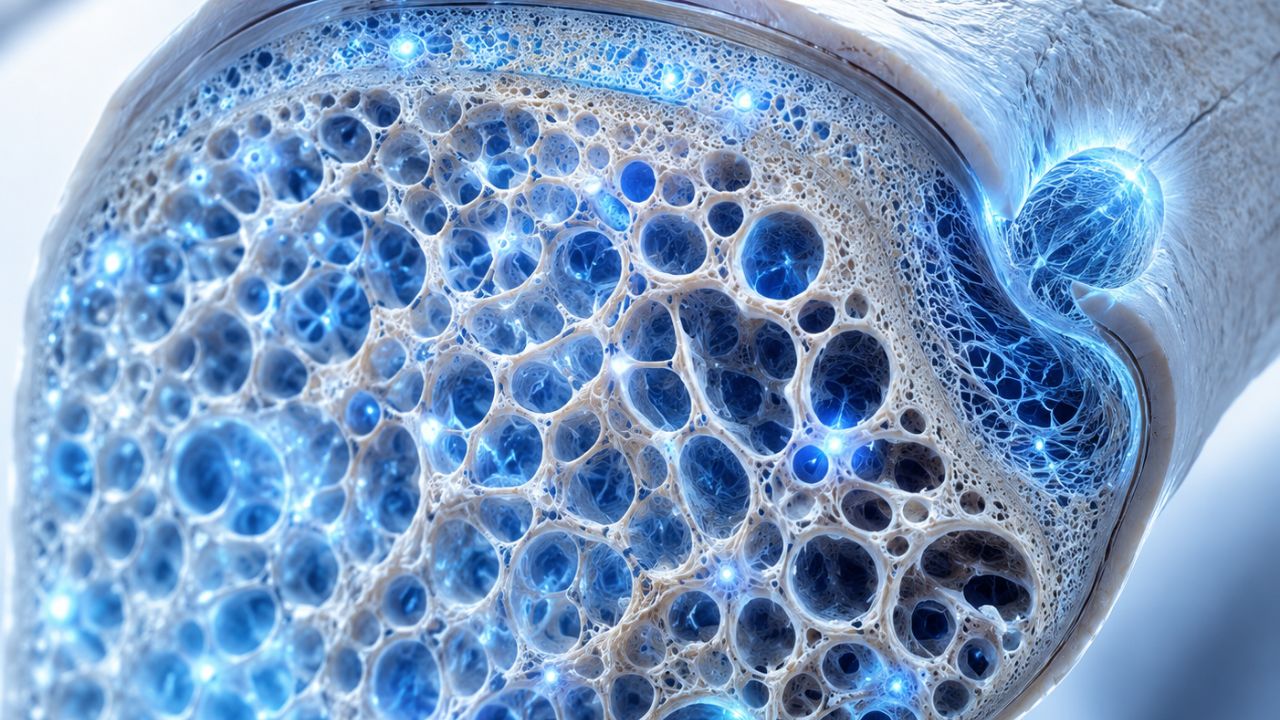
Right now, as you read this, something is happening inside your body that most people never think about. Bone remodeling is quietly tearing down and rebuilding your skeleton, cell by cell, in a process so gradual you’ll never feel it happening. It sounds like something out of science fiction, but it’s simple biological fact: the skeleton you have today is not the same skeleton you had a decade ago.
Bones Aren’t What They Look Like
Most people picture bone the way it appears in a textbook diagram: solid, static, essentially unchanging once you stop growing. That image is almost completely wrong. Bone is actually one of the most metabolically active tissues in the entire human body, constantly being broken down and rebuilt in a continuous cycle that never fully stops, not even for a moment.
At any given time, roughly 10 percent of your skeleton is being actively remodeled somewhere in your body. Old, worn bone tissue is being dissolved in one location while brand-new bone is simultaneously being laid down in another, an ongoing renovation project happening beneath your skin with zero conscious awareness on your part.
The Two Types of Cells Running the Construction Site
This entire process depends on two specialized types of cells working in careful coordination, almost like opposing construction crews that never actually meet but somehow stay perfectly synchronized.
Osteoclasts are the demolition crew. These cells attach themselves to the surface of bone and dissolve old or damaged tissue using acids and enzymes, carving small pits into the bone as they work. Right behind them comes the second crew: osteoblasts, the builders. These cells move into the pits left by osteoclasts and fill them with fresh collagen material, which then hardens and mineralizes into brand-new bone tissue.
The two processes are so tightly balanced that, in a healthy young adult, the amount of bone destroyed and the amount of bone rebuilt stay almost perfectly equal. Scientists call this balanced remodeling, and it’s the reason your skeleton maintains a consistent structure and strength even while its cellular material is being continuously replaced underneath.
Millions of Tiny Construction Sites, All at Once
Here’s where the scale of this process becomes genuinely hard to picture. Bone remodeling doesn’t happen as one single event affecting your whole skeleton at once. Instead, it occurs in millions of microscopic locations scattered throughout your bones simultaneously, each one operating on its own independent timeline.
Each individual remodeling site, known scientifically as a bone remodeling unit, typically takes somewhere between three and six months to complete a full cycle at that specific spot. But because there are so many of these units active at any given moment across your entire skeleton, roughly ten percent of your total bone mass gets replaced every single year.
Do that math forward, and the implication becomes clear: over the course of roughly a decade, virtually your entire skeletal structure has been dissolved and rebuilt from scratch, piece by microscopic piece, without you ever noticing a single moment of the process.
Why Your Body Bothers Doing This at All
It would be reasonable to wonder why the body goes through the trouble of constantly tearing down and rebuilding bone that isn’t broken. The answer comes down to a combination of maintenance, repair, and mineral regulation.
Bones endure constant mechanical stress from walking, standing, lifting, and simply existing under the pull of gravity. Over time, this creates microscopic damage, tiny cracks and weak points invisible to the naked eye. Remodeling continuously identifies and repairs this damage before it can accumulate into something more serious, functioning almost like an ongoing structural inspection and repair service running twenty-four hours a day.
Bone also serves as the body’s primary mineral reserve, storing the vast majority of the body’s calcium and phosphorus. Remodeling allows the body to release these minerals into the bloodstream when needed elsewhere, then rebuild the bone’s mineral content afterward, keeping the entire system in careful chemical balance.
When the Balance Breaks Down
This system works beautifully in young, healthy adults, where bone formation keeps pace with bone breakdown. But the balance doesn’t stay perfectly even forever. Most people reach peak bone mass sometime in their late twenties or early thirties. After that point, the scales gradually begin tipping in the other direction, with bone resorption slowly outpacing new bone formation.
This shift is precisely why bone health earlier in life matters so much for later decades. As remodeling becomes less balanced with age, bone density can gradually decline, eventually contributing to conditions like osteoporosis if the imbalance becomes significant enough. Hormones, particularly estrogen and testosterone, play a substantial role in regulating this balance, which is part of why bone density often drops more noticeably after menopause.
A Body in Constant, Invisible Motion
Perhaps the strangest part of understanding bone remodeling is realizing just how much of your own body is quietly in flux without your knowledge. The skeleton feels permanent because it’s rigid, load-bearing, and visible in every X-ray exactly where you’d expect it to be. But structurally permanent and materially unchanging are two very different things.
You are, in a very literal cellular sense, not built from the same bone material you had ten years ago. Your skeleton has been dismantled and reconstructed continuously since then, one microscopic remodeling site at a time, all without a single conscious sensation to mark the process. It’s one of the more quietly remarkable facts about the human body: even the parts of us that seem most solid and unchanging are, in reality, living construction sites that never stop working.