
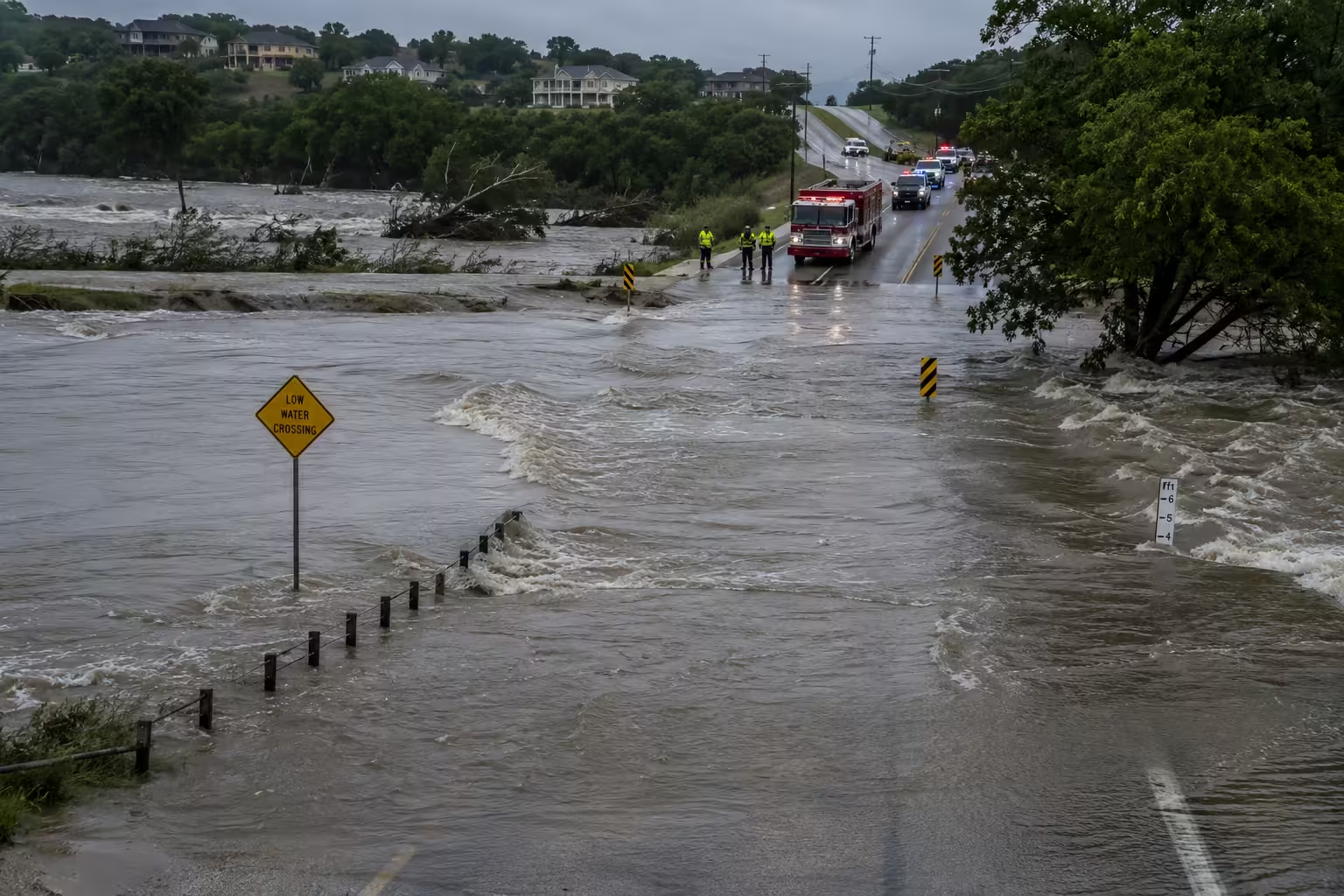
Texas flash floods 2026 have struck the exact same stretch of the Guadalupe River that suffered the deadliest flash flood in modern Texas history just over a year ago. Days of relentless rain triggered a new round of catastrophic flooding this week, killing at least two people and forcing more than 230 water rescues across the Hill Country.
Governor Greg Abbott activated thousands of emergency personnel as residents in Kerrville, Uvalde, and surrounding counties watched the same river that devastated their communities in July 2025 rise toward dangerous levels once again. For families who lost loved ones at Camp Mystic and along the riverbanks last year, this week’s flood sirens brought back memories many had hoped were behind them.
Quick Facts
- At least two people have died: a 74-year-old man in Uvalde and a man in his mid-60s near Center Point, according to Governor Abbott’s office.
- More than 230 water rescues were carried out across the affected counties as of Thursday evening.
- Governor Abbott issued a disaster declaration covering 59 Texas counties as the storm system approached.
- The Guadalupe River at Comfort rose to roughly 37 feet, slightly above the record set during the July 2025 disaster.
- The state deployed more than 2,350 emergency personnel, over 1,400 vehicles, dozens of boats, and about 20 aircraft.
How the Flooding Unfolded
Heavy rain began soaking south-central Texas on Monday night, driven by a slow-moving storm system pulling in moisture from the Gulf of Mexico. Rather than passing through, the storms stalled over the same communities for days – a pattern meteorologists call a mesoscale convective vortex. Ground already saturated from earlier rain had little capacity left to absorb more, so each new burst of rain ran almost directly into creeks and rivers.
By Tuesday, July 14, Governor Abbott had issued a disaster declaration for 59 counties and placed the Texas Division of Emergency Management on round-the-clock operations. As rain intensified through midweek, the National Weather Service issued a rare “high risk” flash flood outlook – a warning level used on only a small fraction of days each year, but historically linked to a disproportionate share of the nation’s flood deaths and damage.
Thursday, July 16 brought the worst of it. The Guadalupe River at Hunt rose from 9 to 19 feet in a single hour before dawn, and kept climbing. Flash flood emergencies – the National Weather Service’s most urgent flood alert – were declared for Kerrville, Hunt, Uvalde, and Knippa. A fast-moving surge tracked downstream from Kerrville through Center Point, Comfort, and several smaller communities. At Comfort, the river gauge climbed more than 34 feet in under two hours. Officials confirmed one death overnight and a second by Thursday afternoon. The same storm system also produced a tornado warning near San Antonio, where wind damage was reported at a shopping center.
Notably, new warning sirens installed after last year’s flood – funded partly through fundraising tied to Camp Mystic – sounded for the first time during a real flood emergency, giving campers and residents along the river critical extra minutes to reach higher ground.
Why This Flood Matters Beyond the Headlines
This is not an isolated storm – it’s the second catastrophic flood to strike the same river basin within thirteen months, in a region meteorologists call “Flash Flood Alley” because of its thin soil, steep terrain, and limestone bedrock that sheds rainwater instead of absorbing it. A repeat disaster of this scale raises hard questions about whether current flood infrastructure, warning systems, and building codes are keeping pace with how often – and how intensely – these storms are now forming.
How Texas Families Are Being Affected
For Hill Country families, the impact is immediate and personal. State highways critical to daily commutes and freight movement were closed for safety. Homes and vehicles in low-lying areas were damaged or destroyed, and some families were displaced with little warning.
Insurance claims, temporary shelter needs, and cleanup costs will strain household budgets in the weeks ahead – layering on top of a region still not financially recovered from the estimated $18 billion to $22 billion in damage caused by last year’s flood. Emergency officials are urging residents statewide to review evacuation routes and flood insurance coverage now, since standard homeowner policies typically do not cover flood damage.
How the World Is Watching
British and Canadian broadcasters have covered the flooding prominently, framing it as another example of the intense, fast-forming storm systems increasingly affecting the American South. Canadian emergency management agencies are monitoring the broader weather pattern as it moves east, though no direct impact on Canada is expected. Internationally, the disaster has renewed attention on flood-plain development, early-warning systems, and the vulnerability of communities built along fast-rising rivers – concerns relevant well beyond Texas.
What Experts Are Saying
National Weather Service forecasters have emphasized that soil already saturated from earlier rain meant even modest rainfall rates could trigger fast flooding, since the ground could no longer absorb runoff. Meteorologists tracking the storm system noted its tendency to keep redeveloping over the same communities rather than moving on – the key factor that allowed rainfall totals to climb so quickly in such a short window.
What to Watch Next
Additional rain was forecast into Friday, meaning already-swollen rivers could rise further before conditions improve. Keep an eye on updates to Governor Abbott’s disaster declaration, which officials say may expand to more counties, along with any federal disaster assistance requests submitted to FEMA. Search efforts along the Guadalupe corridor are expected to continue as floodwaters recede, with local officials likely to release damage assessments and shelter information in the coming days.
Flood Safety: Practical Steps for Residents
- Keep an emergency kit ready year-round, including water, medications, flashlights, and a battery-powered radio.
- Monitor National Weather Service alerts directly rather than relying on secondhand reports or social media.
- Never drive through flooded roads – fast-moving water just a foot or two deep can sweep away a vehicle.
- Review your flood insurance policy before the next storm season begins, since standard homeowner insurance does not typically cover flood damage.
- Know your evacuation route in advance, especially if you live near the Guadalupe River or other flood-prone waterways.
Frequently Asked Questions
How many people have died in the 2026 Texas flash floods? At least two deaths have been confirmed so far – one in Uvalde and one near Center Point.
Is this the same area affected by the July 2025 Texas floods? Yes. This flooding struck the same stretch of the Guadalupe River, in the region known as “Flash Flood Alley.”
How many counties are under a disaster declaration? Governor Abbott’s disaster declaration currently covers 59 Texas counties.
Did the new warning sirens installed after 2025 work? Yes, the sirens – funded in part through fundraising tied to Camp Mystic – sounded for the first time during this flood event, giving residents extra time to reach safety.
Conclusion
The Texas flash floods of 2026 are a stark reminder that the conditions behind July 2025’s tragedy have not gone away. Two lives have already been lost, hundreds of people needed rescue, and the region’s recovery has been set back once again. As floodwaters recede in the coming days, attention will turn to whether the new warning systems performed as intended – and what more can be done to protect communities living along one of the country’s most flood-prone rivers.