

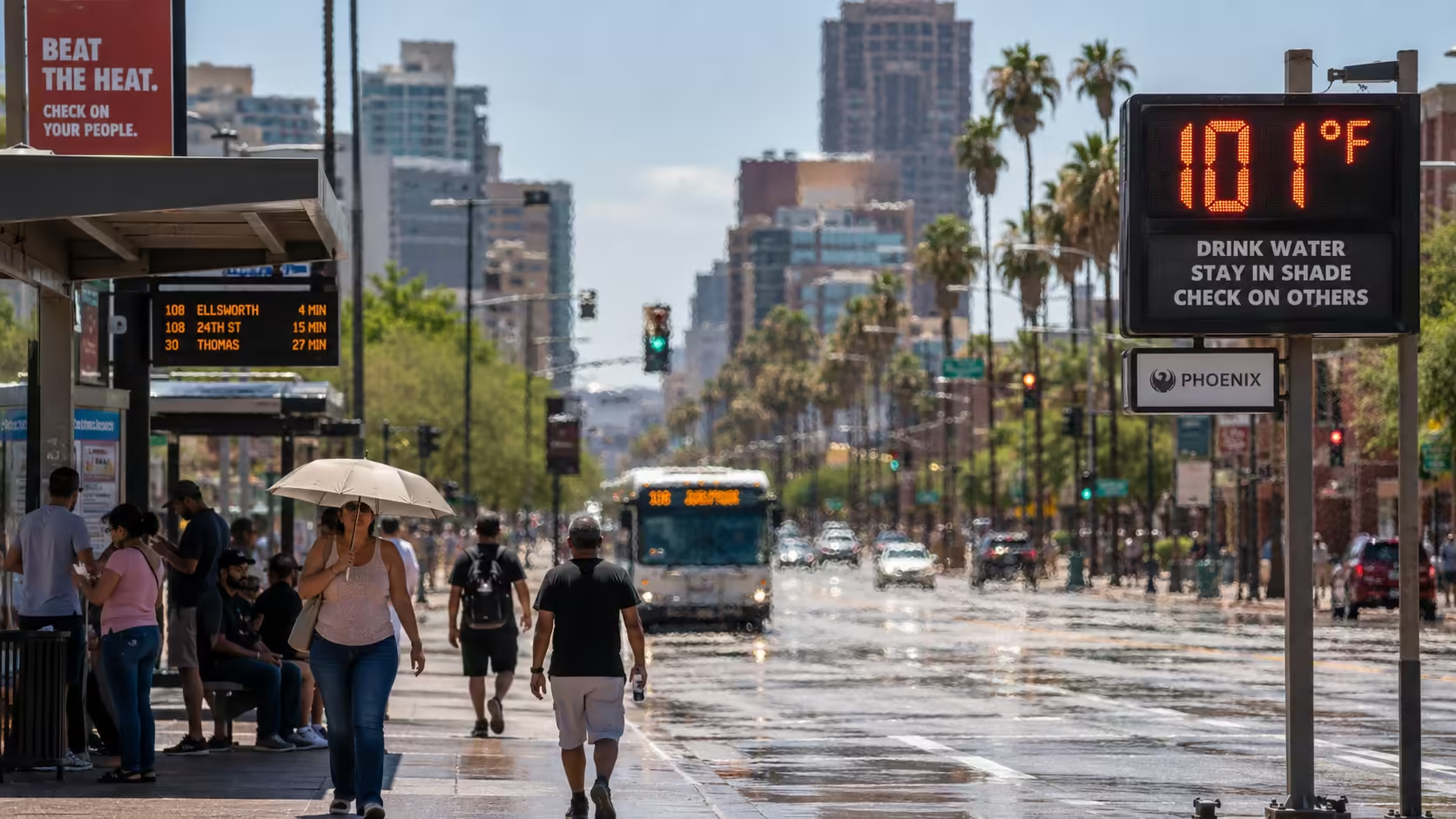
A July 4 heat dome warning just put your family’s holiday weekend in serious danger, and it happened faster than almost anyone expected. Right now, more than 180 million Americans are sitting under a major or extreme heat risk zone, and doctors are already bracing for a wave of hospital visits before the fireworks even start. Forget the usual “stay hydrated” reminder you scroll past every summer. This one is different. Temperatures in cities like New York and Washington, D.C. could hit levels not seen in over a decade, right as millions of families head outdoors to celebrate America’s 250th birthday. If you have kids, elderly parents, or outdoor plans this weekend, you need to read this before you do anything else.
KEY FACTS BOX
- 180 million+ Americans are under “major” or “extreme” heat risk, according to the National Weather Service
- 160 million people are already under active Heat Alerts as of Thursday, per Fox Weather
- Heat index values could climb to 105–114 degrees in parts of the East and South, the National Weather Service says
- Washington, D.C. could see four consecutive days of 100-degree heat during its America 250 celebrations, according to Fox Weather
- New York City may record three straight nights where temperatures never drop below 80 degrees – a rare and dangerous pattern, NBC News reports
What Just Happened
Something unusual parked itself over the United States this week, and meteorologists have a name for it: a heat dome. Picture a giant lid of hot, high-pressure air sitting directly on top of the country, trapping heat underneath it like a pot with the lid on. That is exactly what is happening across the central and eastern U.S. right now, and it is not moving anywhere fast.
The National Weather Service confirmed that more than 180 million people fall into a Level 3 “major” or Level 4 “extreme” heat risk zone across the eastern half of the country. That is roughly 54% of the entire U.S. population, all under threat at the same time. This did not creep up slowly. The heat started building in the Midwest and South earlier this week, then pushed into the Mid-Atlantic and Northeast, and by Friday it settled over the Interstate 95 corridor – the most densely populated stretch of the country.
New York City Health Commissioner Alister Martin did not sugarcoat it. Writing in a public post, he warned that heat strokes are “fast, deadly, and almost always preventable,” adding that as a former ER doctor, he personally watched heat stroke patients come through hospital doors “on days exactly like the ones ahead.” That is not a bureaucrat reading from a script. That is someone who has seen what this looks like up close.
Cities are not waiting around. New York activated extra cooling centers, including the massive Jacob Javits Convention Center, plus mobile cooling vans for wellness checks. Baltimore, Boston, Chicago and Washington, D.C. all declared extreme heat alerts, extended pool hours, and opened emergency cooling stations. Amtrak already canceled several Northeast Corridor trains Thursday morning because of the heat. This is happening during one of the busiest travel weeks of the year, with the country’s 250th Independence Day celebrations and record airport crowds layered right on top of it.
Why Your Family Should Care
Here is the part that should really grab your attention: this heat wave is arriving during the exact weekend when families are outside the most. Parades, cookouts, fireworks, ballgames — all of it happens in direct sunlight, often for hours at a stretch, and often without easy access to shade or air conditioning.
The financial cost is real too. Emergency room visits for heat-related illness spike sharply on “major” and “extreme” risk days, according to the National Weather Service. A single ER visit for heat exhaustion or heat stroke can run into the thousands of dollars once you factor in ambulance fees, IV fluids, and observation time – money most families were not planning to spend on their holiday weekend.
Then there is the overnight problem, which people underestimate constantly. This heat wave is not just brutal in the afternoon. Low temperatures in many major cities will not drop below 80 degrees at night. That matters enormously, because your body needs a cooldown period to recover from daytime heat stress. Without one, heat exposure compounds day after day, and that is exactly when heat stroke risk climbs the fastest – especially for older adults, babies, and anyone with a heart or breathing condition.
Power grids are under strain too. Near-record energy demand is expected in the mid-Atlantic region, and officials have warned that some areas could see rolling power cuts if the grid becomes unstable. Losing air conditioning during a heat dome like this is not a minor inconvenience. It is a genuine safety issue for vulnerable family members.
USA Families – Here Is What To Know
American families are facing the sharpest edge of this heat dome, and local governments are responding with real urgency. Washington, D.C. issued an Extreme Heat Alert running through Sunday morning, with the city preparing for four straight days at 100 degrees or higher – right as it hosts massive crowds for America’s 250th anniversary events, including Friday’s “A Capitol Fourth” concert and Saturday’s fireworks show.
Philadelphia could tie its all-time hottest temperature ever recorded at 106 degrees, according to the Fox Forecast Center. Boston issued an Excessive Heat Warning through Friday and is recommending residents reschedule outdoor activities entirely. Chicago activated its Emergency Operations Center, and Nashville is running heat patrols to check on vulnerable residents with cold water and wet towels.
If you are heading to a July 4th event this weekend, expect hydration stations, first aid tents, and extra ambulance crews on standby – organizers in D.C. confirmed all three will be in place. That tells you how seriously officials are taking this. Meanwhile, wildfire risk is climbing in parts of Arizona, Utah, Colorado, New Mexico and Wyoming, with dry air and gusty winds adding another layer of danger out west.
UK Families – Here Is What To Know
British families with travel plans to the U.S. East Coast this week need to build this heat wave into their itinerary, not treat it as background noise. Anyone flying into Washington, D.C., New York, or Philadelphia for Independence Day tourism or World Cup-related travel should expect daytime highs well above what most UK visitors are used to, plus overnight temperatures that offer little relief.
The UK has its own experience with sudden, dangerous heat spikes in recent summers, and the same core advice applies here: avoid peak sun hours between roughly midday and 4 p.m., carry water at all times, and know the early warning signs of heat exhaustion – dizziness, headache, confusion, and nausea. If you are visiting elderly relatives or traveling with young children in affected U.S. cities this weekend, treat cooling centers and shaded rest stops as a required stop on your route, not an optional one.
Travel insurance is also worth a second look before you fly. Heat-related flight delays and cancellations, like the Amtrak disruptions already reported in the Northeast, can ripple into connecting flights and hotel bookings.
Canadian Families – Here Is What To Know
Canadians traveling south for the holiday weekend, or driving across the border for shopping, sports, or family visits, are stepping directly into this heat dome zone. The risk is highest in border-adjacent states like New York, Michigan, and states along the Great Lakes corridor, where heat alerts are active and temperatures are running well above seasonal norms.
Provincial differences matter here too. Families from cooler regions like British Columbia or Atlantic Canada may be far less acclimatized to sustained 100-degree heat than those coming from Ontario or the Prairies, which means the health risk is actually higher for some Canadian travelers even at the same outdoor temperature. If your family is driving into the U.S. this weekend, pack extra water, plan rest stops in air-conditioned spaces, and check ahead for cooling centers in your destination city before you leave home.
What Experts Are Saying
Alan Reppert, Senior Meteorologist at AccuWeather, pointed directly at the power grid as a growing concern, noting that the extreme heat and humidity are expected to push mid-Atlantic energy usage to near-record levels, warning that “some companies could see power cuts if the grid becomes unstable.” My read on that: if you live in a heat-alert zone, treat backup plans for AC loss – like knowing your nearest cooling center – as essential this weekend, not optional.
New York City Health Commissioner Alister Martin’s warning that heat stroke is “fast, deadly, and almost always preventable” is the single most important line in this entire story. It tells you two things at once: the danger is real, and you have far more control over the outcome than you might think. Prevention beats treatment every single time with heat illness.
The National Weather Service’s own forecast language calling this a potentially “historic heatwave” with a chance of “all-time record highs” should not be brushed off as typical summer hype. When the agency responsible for issuing these warnings starts using words like “historic” and “record,” that is a deliberate signal that this event sits well outside a normal hot week.
7 Things Your Family Must Do Right Now
- Check your local Heat Alert level today. Search the National Weather Service website for your zip code and know whether you are in a “major” or “extreme” risk zone before you make any outdoor plans.
- Reschedule outdoor events to early morning or evening. Move parades, sports, and yard work to before 10 a.m. or after 7 p.m., when direct sun exposure drops significantly.
- Locate your nearest free cooling center now. Cities like New York, Baltimore, and Chicago have opened public cooling centers – find yours before you need it, not during an emergency.
- Check on elderly neighbors and relatives daily. Older adults often avoid using air conditioning to save money and may isolate themselves without telling anyone. A quick daily phone call or visit can genuinely save a life.
- Never leave kids or pets in a parked car, even briefly. Car interiors can climb past 120 degrees within minutes during this kind of heat, even with windows cracked.
- Know the warning signs of heat stroke. Confusion, hot dry skin, a rapid pulse, or loss of consciousness are emergency signs – call 911 immediately rather than waiting to see if symptoms improve.
- Prepare for possible power outages. Charge phones and medical devices now, keep a cooler with ice packs ready, and identify an air-conditioned backup location in case your power goes out during peak demand.
Conclusion
This July 4 heat dome warning is not a routine weather story – it is a direct safety issue for well over half the U.S. population during one of the year’s biggest family celebration weekends. Between record daytime highs, dangerously warm overnight temperatures, and a strained power grid, the risks here are stacking on top of each other in a way that demands real attention, not casual scrolling. The good news is that heat illness is almost entirely preventable when families take it seriously and act early. Watch the forecast for your area, lean on cooling centers when you need them, and check in on the people around you who are most vulnerable. This heat dome will pass, but how your family handles the next few days is entirely within your control.
Stay informed, stay prepared, and stay one step ahead with SultanNetwork – your trusted source for finance, business, technology and global news, updated 24 hours a day, 7 days a week.