


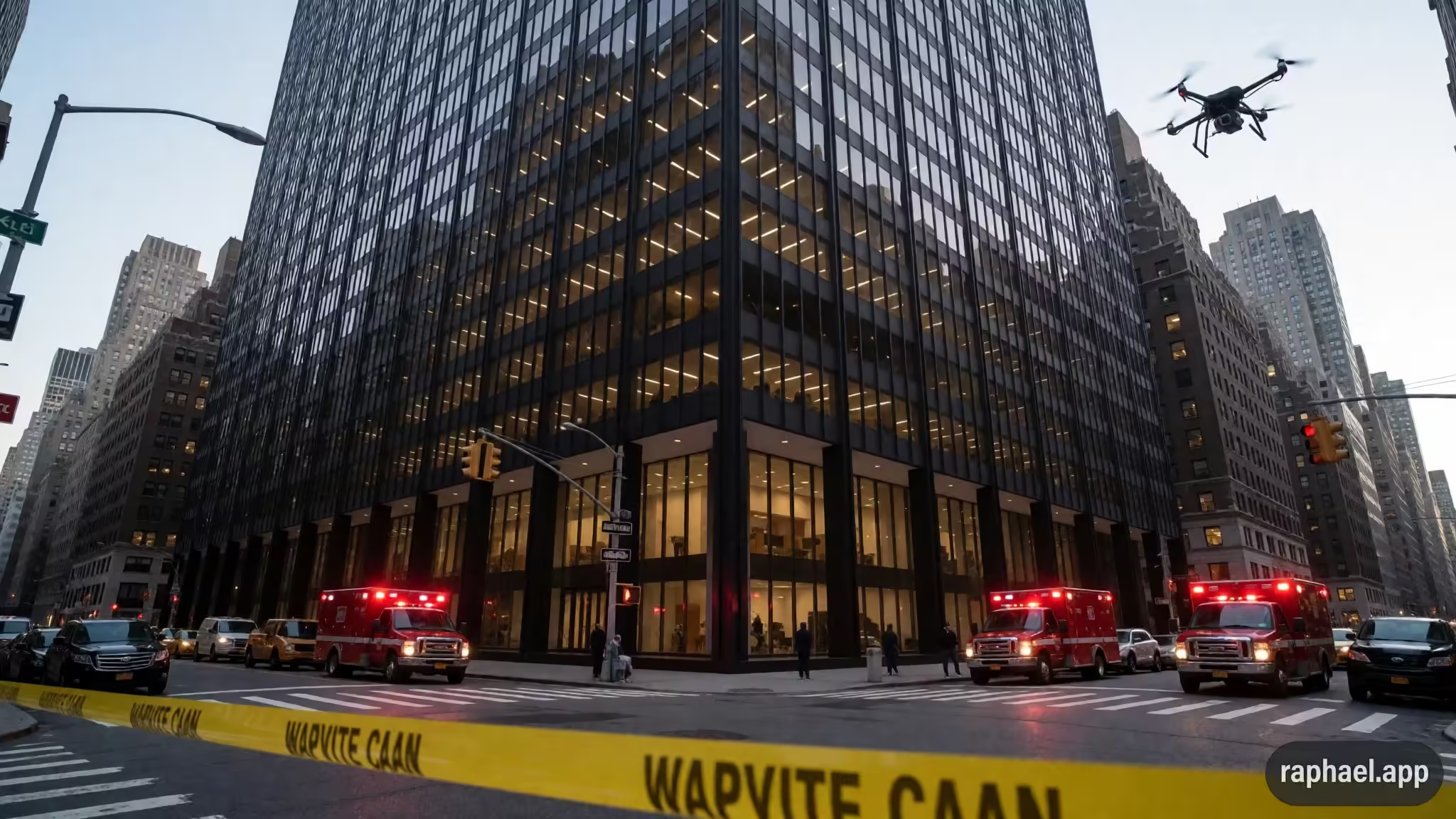
Manhattan building collapse fear gripped an entire city block this week after steel columns inside a former Pfizer office tower started buckling under their own weight. If you live, work, or have relatives in a big city, this story should stop you in your tracks. A high-rise that housed thousands of workers every single day suddenly became too dangerous to occupy, and officials are still trying to figure out exactly why. Your family doesn’t need to live in New York City for this to matter. Aging skyscrapers sit in nearly every major downtown across the USA, the UK, and Canada, and this incident is a loud warning sign for all of them.
What Just Happened
Steel doesn’t just buckle for no reason. Something inside that Manhattan tower gave way, and the timeline moved fast once it did.
City officials confirmed at least two structural columns started failing, prompting an immediate evacuation order. Emergency crews arrived within hours, and the Department of Buildings sent up drones instead of sending people inside first – a clear sign that nobody wanted to risk climbing 21 flights into a building that might not hold.
Commissioner Ahmed Tigani told reporters the building’s steel frame construction means a total collapse is unlikely. Engineers are instead worried about a localized collapse, where one section of the structure gives way while the rest stays standing. That distinction matters enormously for public safety planning, but it’s cold comfort if you’re the person whose office sat on that floor last week.
Mayor Mamdani went further, describing multiple cracks running through the building and floors that were visibly sagging. That’s the kind of detail that turns a routine inspection into a citywide news story. NYU Tandon engineering professor Magued Iskander joined national coverage to walk viewers through how steel columns fail – usually a slow process of stress and fatigue rather than a sudden snap, which is actually why inspectors caught it before anyone got hurt.
As of the latest update, the Department of Buildings’ plan involves getting engineers safely onto the 21st floor to install additional emergency trusses. Trusses spread weight across a wider structural area, essentially giving the building a temporary crutch while permanent repairs get designed. Nobody has announced a reopening date, and nobody should expect one soon. Buildings like this get fixed in stages, not overnight.
Why Your Family Should Care
Picture your own workplace, your kid’s school building, or the apartment tower down the street. Most of us walk into buildings every day without a single thought about the steel hiding inside the walls. This story is a reminder that structural safety isn’t automatic – it’s maintained, inspected, and sometimes it fails anyway.
There’s a financial angle here too, and it’s bigger than most people realize. Commercial buildings this size can cost tens of millions of dollars to repair when structural columns fail, and that cost eventually shows up somewhere – higher rents, higher insurance premiums, or tax dollars if a public agency owns the property. Office tenants who get displaced don’t just lose a workspace; they lose productivity, and small businesses inside these towers can lose their entire customer base overnight.
Then there’s the safety piece, which hits closer to home for parents. Every family wants to believe the buildings their kids attend school in, or the offices where a parent works 40-plus hours a week, are structurally sound. This incident shows that even a building tied to a major pharmaceutical company like Pfizer wasn’t immune to aging infrastructure problems. If it can happen there, families are right to ask questions about buildings in their own neighborhoods.
The emotional weight of an evacuation shouldn’t get lost either. Employees who worked in that tower had minutes, not hours, to gather belongings and leave. That kind of sudden disruption creates real stress, even when nobody gets physically hurt.
USA Families – Here Is What To Know
American families in major cities should treat this as a nudge, not a panic trigger. New York’s Department of Buildings has inspection protocols that most large US cities mirror, but enforcement and funding vary widely by state.
If you or a family member works in an older commercial high-rise, it’s completely reasonable to ask your building management about the most recent structural inspection date. Most commercial leases actually give tenants the right to request this information.
Insurance is another piece worth understanding. Commercial property insurance typically covers structural failure, but tenants carrying business interruption insurance are the ones who actually get compensated for lost income during an unexpected closure. If your family runs a small business inside a leased commercial space, checking that coverage now – not after an emergency – protects your household income.
Parents should also know that public school buildings undergo separate, often more frequent, inspection cycles than private commercial towers, which offers some added peace of mind.
UK Families – Here Is What To Know
British families watching this story from across the Atlantic should recognize the parallels immediately. London’s skyline includes plenty of aging steel and concrete towers built during the same postwar and 1970s construction boom that produced buildings like this one in Manhattan.
The UK tightened building safety rules significantly after the Grenfell Tower tragedy, creating the Building Safety Regulator and requiring more rigorous inspection regimes for high-rise residential buildings specifically. Commercial towers, however, don’t always fall under the same strict residential safety rules, which is worth knowing if a family member works in central London office space.
Housing associations and local councils in the UK are required to maintain structural safety records that residents can request. If your family lives in a council-managed high-rise, you’re entitled to ask when the last full structural survey took place, and you should feel free to use that right.
Canadian Families – Here Is What To Know
Canadian cities like Toronto and Vancouver have seen explosive high-rise construction over the past two decades, but that doesn’t mean older buildings get ignored. Provincial building codes vary – Ontario and British Columbia both run separate inspection and enforcement systems, so a tower’s safety oversight can genuinely depend on which province it sits in.
Municipal building departments in most major Canadian cities keep public inspection records, similar to what New York’s Department of Buildings maintains. Families renting or working in older downtown towers can typically request this information through city hall or an online permits portal.
Given how fast North American cities are growing, this incident is a timely reminder for Canadian building authorities to keep inspection funding a budget priority rather than an afterthought.
What Experts Are Saying
NYU Tandon engineering professor Magued Iskander helped translate a technical structural failure into language regular people could understand, explaining that steel column problems typically develop gradually through stress and fatigue. That’s actually good news buried inside bad news – gradual failure gives inspectors a chance to catch problems before anyone gets hurt, which appears to be exactly what happened here.
Department of Buildings Commissioner Ahmed Tigani focused his public comments on containment, emphasizing that the steel-frame design limits the collapse risk to a localized section rather than the entire structure. That’s a technical distinction, but it’s the difference between an isolated repair job and a citywide catastrophe.
Mayor Zohran Mamdani’s willingness to publicly describe the visible cracks and sagging floors signals a City Hall that wants transparency over reassurance right now – a notable shift for a story this sensitive, and one that generally builds more public trust than vague official statements do.
Taken together, these voices tell a consistent story: this is serious, it’s being taken seriously, and the response so far looks methodical rather than reactive.
7 Things Your Family Must Do Right Now
- Ask your building management for the last structural inspection date – this is standard information tenants can request in writing.
- Check your renter’s or business interruption insurance policy today, before you need it, not after.
- Locate your building’s emergency evacuation plan and make sure every family member working or attending school in a high-rise knows two exit routes, not just one.
- Sign up for local emergency alerts – most major cities, including New York, London, and Toronto, offer free text or app-based emergency notification systems.
- Talk to your kids’ school about their most recent facility safety inspection if they attend classes in an older building.
- Save your local Department of Buildings or council safety hotline in your phone contacts right now, while you’re thinking about it.
- Watch for follow-up coverage on this story specifically – repair timelines and reopening dates will tell you a lot about how seriously the underlying damage was.
What This Means Going Forward
A steel column doesn’t buckle overnight, and neither does public trust in the buildings we walk into every day. This Manhattan scare ended without injuries, thanks to inspectors who caught the problem before it turned catastrophic, but it exposed something bigger than one office tower. Cities across the USA, UK, and Canada are full of aging steel-frame buildings that haven’t faced this kind of scrutiny in years.
Repairs on the Manhattan tower will likely take months, not weeks, and the final cost will probably run into the tens of millions. What happens next – how the building gets fixed, whether tenants return, and whether other cities take a harder look at their own aging towers – will shape this story for a long time to come.
Stay informed, stay prepared, and stay one step ahead with SultanNetwork – your trusted source for finance, business, technology and global news, updated 24 hours a day, 7 days a week.