
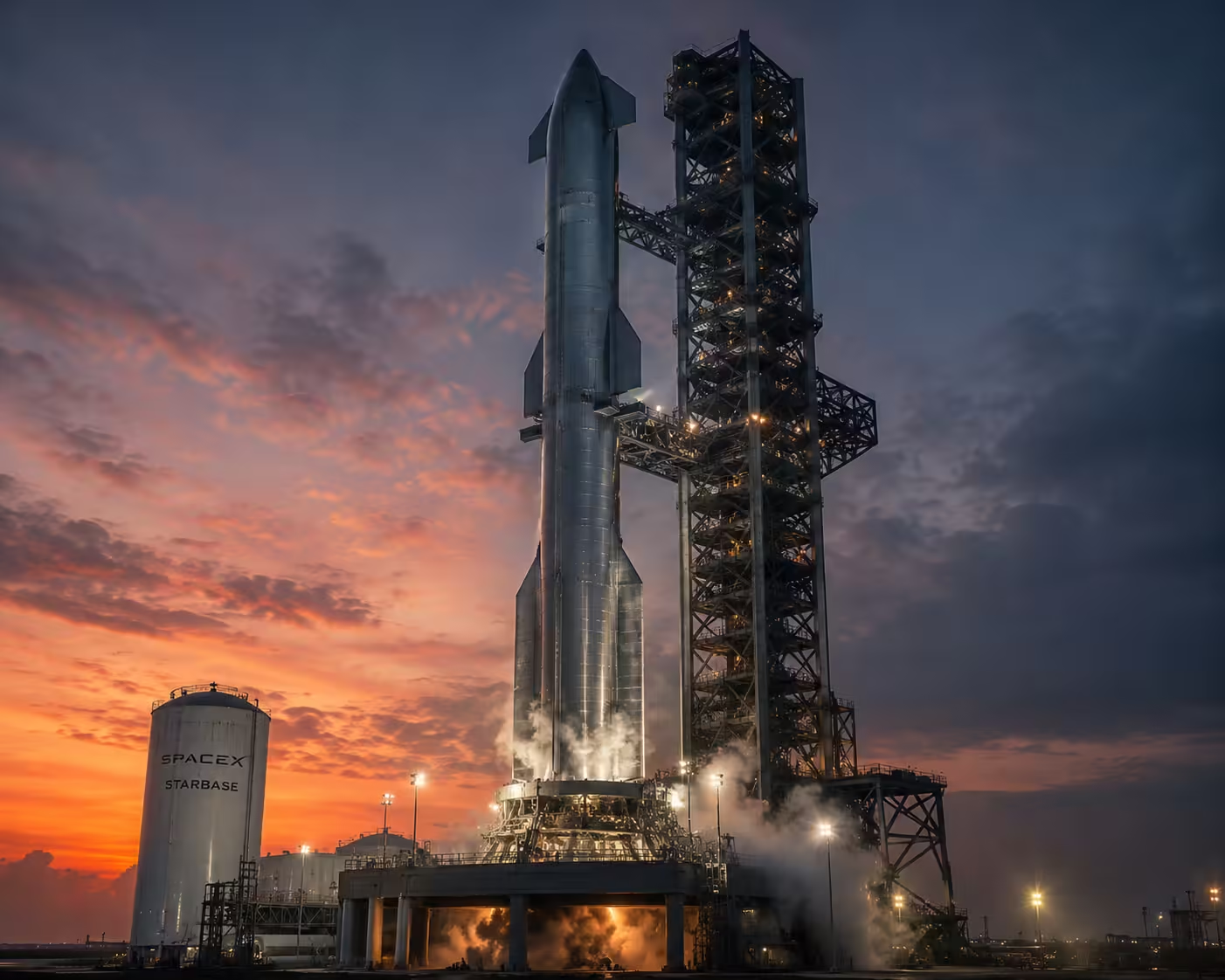
SpaceX Starship launch Starlink V3 satellites for the first time this week, marking a milestone the company has been building toward for years. Flight 13 is targeting a 90-minute launch window opening around 6:45 p.m. Eastern on Thursday, July 16, from SpaceX’s Starbase site in South Texas. Unlike earlier test flights that carried dummy weights standing in for satellites, this mission will deploy 20 fully functional, next-generation Starlink V3 satellites – hardware SpaceX says is central to bringing gigabit internet speeds within reach of Starlink customers.
For anyone living somewhere fiber-optic cable never reached, this launch matters more than the usual rocket spectacle. It’s a real test of whether satellite internet can finally compete with a wired connection.
Quick Facts
- Starship Flight 13 targets a launch window opening around 6:45 p.m. ET (5:45 p.m. CT) on Thursday, July 16, from Starbase, Texas.
- This will be the first flight to carry 20 fully operational Starlink V3 satellites, rather than the mass simulators used on prior test flights.
- Each V3 satellite offers roughly 1 terabit per second of downlink capacity and 160 gigabits per second of uplink — more than 10 times the downlink capacity of earlier V2 Mini satellites, according to SpaceX.
- The satellites will extend solar arrays and antennas, attempt to link with a South African ground station and the broader Starlink constellation, then burn up in the atmosphere roughly 20 minutes after deployment.
- The launch follows a Federal Aviation Administration mishap investigation into Flight 12’s booster failure in May, which the agency closed on July 13 after accepting SpaceX’s corrective actions.
What Happened?
SpaceX confirmed the July 16 target after completing a static fire test of the Super Heavy booster earlier in the week and receiving sign-off from the FAA. That approval had been the last hurdle: Flight 12, launched May 22, was the first outing for the upgraded V3 Starship, and while the upper stage largely performed as planned, the Super Heavy booster failed to properly reignite its engines during its return, causing it to flip 90 degrees in the wrong direction and crash into the Gulf of Mexico instead of completing a controlled splashdown.
The FAA’s investigation, closed on July 13, pointed to two most likely causes: heat effects on propulsion components during ascent, and engine alarm settings that shut down engines prematurely. SpaceX says it has since revised the booster’s engine startup sequence and alarm thresholds to prevent a repeat.
Flight 13 will follow a similar suborbital path as its predecessor, launching from Texas, arcing over the Caribbean, and coming down in the Indian Ocean without reaching full orbit. The major difference is the payload. Where Flight 12 carried satellite mass simulators, Flight 13 carries 20 functioning Starlink V3 satellites – the first time this hardware has flown. Because they share Starship’s suborbital trajectory, the satellites won’t stay in space long: SpaceX expects them to extend their solar arrays and antennas, attempt contact with a ground station in South Africa and the wider Starlink network using laser links, then reenter the atmosphere and burn up roughly 20 minutes after release.
Six of the 20 satellites carry an added feature: onboard cameras aimed at Starship’s heat shield, designed to send back real-time imagery of how the thermal tiles hold up during flight. Engineers have painted several tiles white to give the cameras clear reference points, including some meant to simulate missing tiles.
Why This Matters
Starlink V3 satellites are physically too large to fit inside a Falcon 9 rocket’s payload fairing, which is why SpaceX needs Starship working reliably to deploy them at meaningful scale. According to SpaceX’s own public filings, a single successful Starship flight could eventually add roughly 60 terabits per second of new network capacity – more than 20 times what a typical Falcon 9 Starlink launch adds today.
That capacity increase is the whole point. Starlink has built its reputation on reaching places fiber and cable never will, but early versions of the service struggled with the kind of consistent, high-bandwidth performance that video calls, cloud backups, and multiple connected devices demand at once. V3 satellites are designed to close that gap, potentially putting satellite internet in the same performance tier as physical fiber connections for the first time.
Starlink has also become a financially important part of SpaceX’s business. The company’s recent public offering documents reportedly describe Starlink as the most profitable part of SpaceX’s operations, and its growth strategy depends heavily on Starship reaching full operational status.
Impact on American Families
For rural households and small businesses currently using Starlink, or considering it because cable and fiber aren’t available, this launch is a preview of what’s coming rather than an immediate upgrade. The satellites on Flight 13 will burn up shortly after deployment as part of the test, so no customer will see faster speeds because of this specific mission. What it does confirm is that the hardware behind the next real capacity upgrade is finally flying and functioning, which matters for anyone weighing Starlink against other rural internet options for schoolwork, remote work, telehealth appointments, or simply reliable connectivity during power outages when traditional lines go down.
International Perspective
United Kingdom: European telecom analysts are watching how V3’s capacity gains might reshape competition in rural connectivity markets where satellite broadband has struggled to match wired alternatives on price and consistency.
Canada: Northern and remote Canadian communities, many of which rely heavily on satellite internet due to the impracticality of running fiber across vast distances, stand to benefit directly if V3 satellites deliver the speed gains SpaceX is promising.
Global perspective: Faster, higher-capacity satellite internet has implications well beyond rural connectivity, including for maritime and aviation connectivity, disaster response communications, and reducing the global digital divide in regions where ground infrastructure is limited or unreliable.
What Experts Say
SpaceX has stated publicly that the V3 satellites aim to greatly expand the network’s capacity and user speeds, framing this launch as a foundational step rather than the finished product. Space industry reporters covering the mission have noted that Starship’s ability to carry V3 satellites represents a fundamental shift in how quickly SpaceX can expand Starlink’s total capacity compared with its existing Falcon 9-based deployment method.
Independent space analysts tracking the FAA’s investigation have pointed out that the two identified failure causes from Flight 12 – thermal effects on propulsion components and premature engine alarm shutdowns – are the kind of specific, addressable engineering issues that typically get resolved through hardware and software changes rather than requiring a larger redesign, which is consistent with SpaceX’s relatively quick 52-day turnaround between flights.
What Readers Should Watch Next
- Whether the Super Heavy booster completes its landing burn successfully this time, since that capability is central to SpaceX’s reusability goals and cost-cutting plans.
- Confirmation that the 20 V3 satellites successfully extend their solar arrays and connect with ground stations and the broader constellation, even briefly.
- Heat shield performance data from the six camera-equipped satellites, which will inform future attempts at returning Starship to its launch site.
- Any announcement of a follow-up flight aiming for full orbit, which SpaceX has said could follow if Flight 13 succeeds.
Practical Takeaways
- If you’re considering Starlink for rural or remote internet access, treat this launch as an early signal of future capacity improvements rather than an immediate speed boost for current subscribers.
- Space and tech enthusiasts can watch the launch live through SpaceX’s official channels; the 90-minute window opens around 6:45 p.m. ET Thursday, July 16, from Starbase, Texas.
- Businesses in areas with limited connectivity options should keep an eye on official Starlink capacity announcements over the coming months, since V3 deployment at scale – not this single test flight – is what will actually change available bandwidth.
Conclusion
Thursday’s Starship Flight 13 brings together two of SpaceX’s biggest bets: a fully reusable heavy-lift rocket and a next-generation satellite network designed to make orbital internet competitive with fiber. Neither piece works without the other, which is what makes this specific test flight more consequential than a typical rocket demonstration. Whether the booster sticks its landing and the V3 satellites perform as designed will shape how quickly SpaceX can scale up Starlink’s capacity – and how soon rural households and remote businesses actually feel the difference.