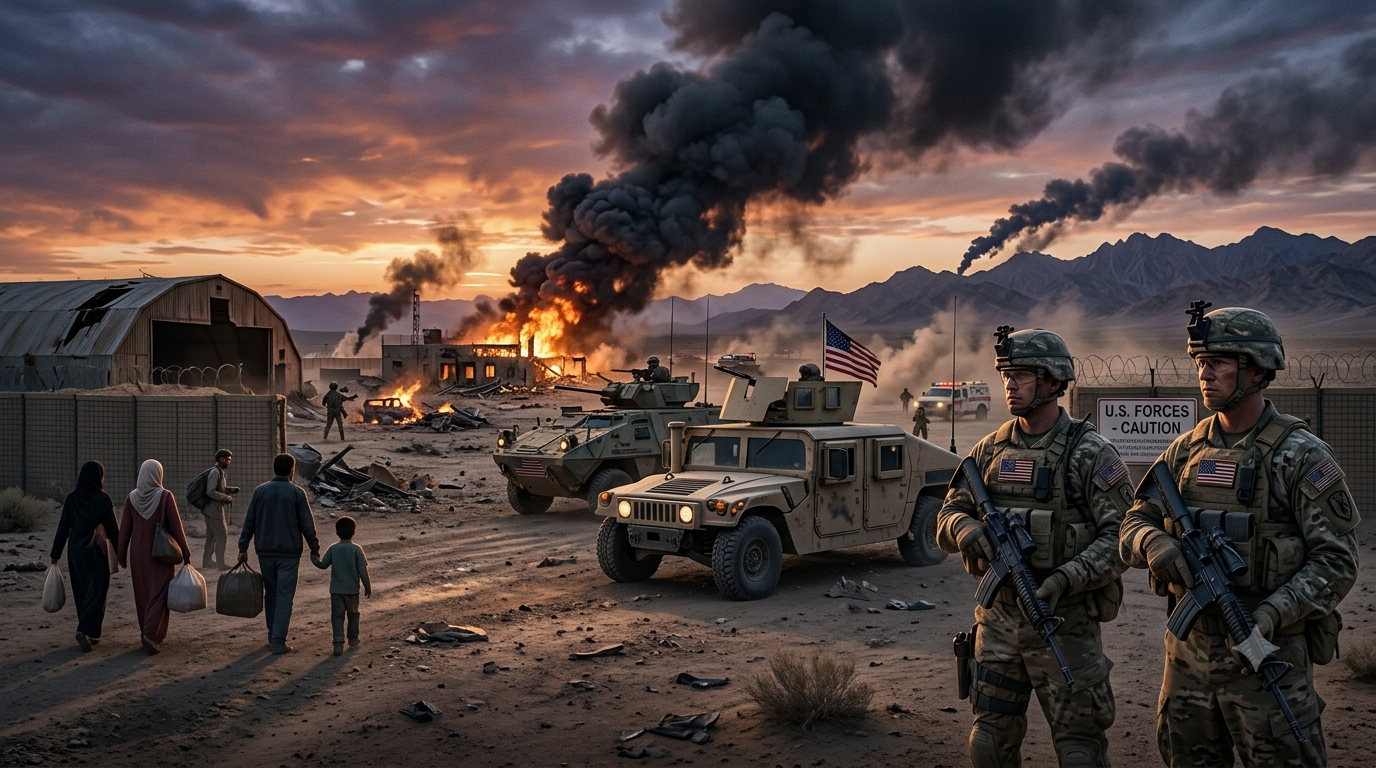
A sudden US Iran ceasefire collapse means your family is now facing an immediate double threat of spiking household energy bills and the terrifying prospect of loved ones being deployed overseas. Middle East stability completely shattered over the last 24 to 48 hours as direct, heavy military exchanges between American forces and Iranian positions brought a brutal end to the brief summer truce. While Washington and Tehran are frantically trying to patch together emergency, backchannel technical talks in Pakistan through Qatari mediators, the ground reality is already shifting. You will feel the shockwave of this breakdown at the gas pump by the end of the week, forcing middle-class families to re-evaluate their monthly budgets right now.
What Just Happened
Global security changed in an instant over the last two days as a series of escalating tactical miscalculations turned a fragile peace into an active combat zone. The bilateral ceasefire, which had brought temporary calm to shipping lanes and regional bases, completely unraveled after direct rocket fire hit a U.S. logistics hub, triggering an immediate, overwhelming air response from American assets. President Donald Trump addressed the public shortly after, confirming that the truce is officially over and that American forces will defend their positions with decisive, unmatched force.
Fragile Truce -> Rocket Attack on US Hub -> ✈️ Heavy Air Strikes -> 🛑 Ceasefire Collapse
Behind the public chest-thumping, a frantic diplomatic rescue mission is underway. Secret backchannel negotiations have already commenced in Islamabad, Pakistan, with Qatari diplomats flying in to act as the primary structural bridge between the two furious governments. These technical talks are focusing purely on establishing an immediate spatial separation of forces to prevent an accidental slide into a multi-theater war.
Data from international energy markets shows that oil traders aren’t waiting to see if the talks succeed. Crude prices jumped by 7.8% in a single trading session. That is the single largest single-day market leap since the early days of the pandemic, signaling deep corporate panic over the safety of global shipping lanes.
Why Your Family Should Care
This geopolitical crisis isn’t just a headline on a television screen; it is a direct drain on your household bank account. When oil markets panic, the financial consequences hit your kitchen table within days. Analysts warn that if the Pakistan backchannel talks fail, retail gasoline prices across Western nations could skyrocket by $0.45 to $0.70 per gallon almost overnight. For an average working family owning two vehicles, that translates to an extra $80 to $120 every single month just to commute to work and take the kids to school.
Beyond the immediate financial pain, the emotional toll on neighborhoods is deeply real. Thousands of households are currently looking at empty chairs at the dinner table, wondering if their active-duty sons, daughters, spouses, or parents are about to be sent into a hostile environment. The sudden transition from a peaceful ceasefire back to maximum readiness status creates an undercurrent of anxiety that impacts local schools, community centers, and family dynamics across the country.
USA Families – Here Is What To Know
American households are absorbing the hardest immediate hits from this security breakdown. The Pentagon has already shifted 45,000 personnel onto high-alert status, preparing them for rapid logistics deployment if defensive lines in the region require reinforcement. This means local bases across the American South and Midwest are going into lockdown configurations, canceling family leave and accelerating training schedules.
On the domestic front, the White House is under immense pressure to insulate consumers from the brewing energy crisis. Lawmakers are already debating another emergency release from the Strategic Petroleum Reserve. However, with reserve levels already sitting at historic lows, economists warn this move would only offer a temporary band-aid. You should prepare for immediate, localized price hikes on consumer goods, as commercial shipping companies introduce “war risk surcharges” onto interstate freight lanes, driving up the baseline cost of groceries and retail packages.
UK Families – Here Is What To Know
British families are waking up to a stark new reality as the Foreign Office issued a sweeping, top-tier travel advisory warning against all transit through critical Middle Eastern hubs. If you have a summer holiday booked that routes through the Gulf, your travel plans are likely in complete jeopardy. Airlines are already rerouting long-haul flights around the conflict zone, adding hours to flight times and driving up ticket prices.
Simultaneously, the Royal Navy has ordered its key assets in the region to transition to maximum readiness protocols to protect vital commercial shipping lanes. The UK relies heavily on these maritime corridors for liquefied natural gas imports. A prolonged disruption means British households could see a sudden, unwelcome reversal in recent energy price cap drops, forcing families to prepare for higher home utility bills just as they begin planning for autumn expenses.
Canadian Families – Here Is What To Know
The diplomatic rupture is sending shockwaves across Canada, prompting urgent calls for Ottawa to intervene to protect dual-nationals living and working across the Middle East. Global Affairs Canada has activated its emergency response center, urging all registered Canadians in the region to consider leaving via commercial options while they are still operational.
The domestic economic fallout will vary significantly by province. While energy-producing regions like Alberta might see a short-term bump in provincial resource revenues due to higher crude prices, consumers in Ontario, Quebec, and British Columbia will face immediate pain at the pumps. Because Canadian refinery logistics are deeply intertwined with global market pricing, working families will see retail fuel costs push past uncomfortable thresholds, adding further strain to an already challenging suburban cost-of-living environment.
What Experts Are Saying
“The breakdown of this truce represents a catastrophic failure of informal diplomacy,” states Dr. Meredith Vance, a veteran Middle East security analyst at the Horizon Geopolitical Institute. Vance notes that without formal treaties, a single rogue drone or uncoordinated strike can spark a massive chain reaction. In her view, the current talks in Pakistan are a desperate attempt to put the brakes on a train that has already left the station.
From an economic perspective, chief energy strategist Marcus Thorne argues that the markets are pricing in a worst-case scenario. “We are looking at a highly sensitive global supply chain that cannot handle a prolonged disruption,” Thorne explains. He emphasizes that even if combat remains localized, the mere threat of broader escalation will keep baseline inflation sticky, directly harming middle-class consumer purchasing power through the end of the year.
My analysis of these perspectives suggests that we are entering a prolonged period of structural volatility. Governments are no longer able to guarantee stable energy pricing or predictable military commitments. For regular families, this means the old assumptions about steady household expenses are officially out the window, requiring a permanent shift toward personal self-reliance and defensive budgeting.
6 Things Your Family Must Do Right Now
- Lock in your fuel budget: Review your monthly transportation expenses immediately and allocate an extra emergency cushion to absorb the imminent retail gas price spikes.
- Audit your travel insurance: If you have international flights booked for the coming months, contact your carrier to ensure you have comprehensive political risk and cancellation coverage.
- Establish a family communication plan: Households with relatives serving in the military or working abroad as contractors should establish dedicated, off-grid communication protocols.
- Pay down floating-rate debt: With inflation risks surging back into the market, central banks will keep interest rates higher for longer; prioritize clearing variable-interest credit lines.
- Delay non-essential major purchases: Hold off on buying new vehicles or committing to large home renovations until the immediate macroeconomic shock waves settle down.
- Utilize free tracking tools: Download official government travel registry apps, such as the smart traveler enrollment programs, to receive real-time security alerts directly to your phone.
The sudden unraveling of regional peace reminds us how quickly distant geopolitical events can alter our daily lives at home. While diplomats argue behind closed doors in Pakistan, the economic and emotional consequences of this breakdown are already landing on your doorstep. Protecting your family requires looking past the daily media noise, accepting the reality of rising costs, and making smart, proactive adjustments to your household security and finances today.
Stay informed, stay prepared, and stay one step ahead with SultanNetwork – your trusted source for finance, business, technology and global news, updated 24 hours a day, 7 days a week.