

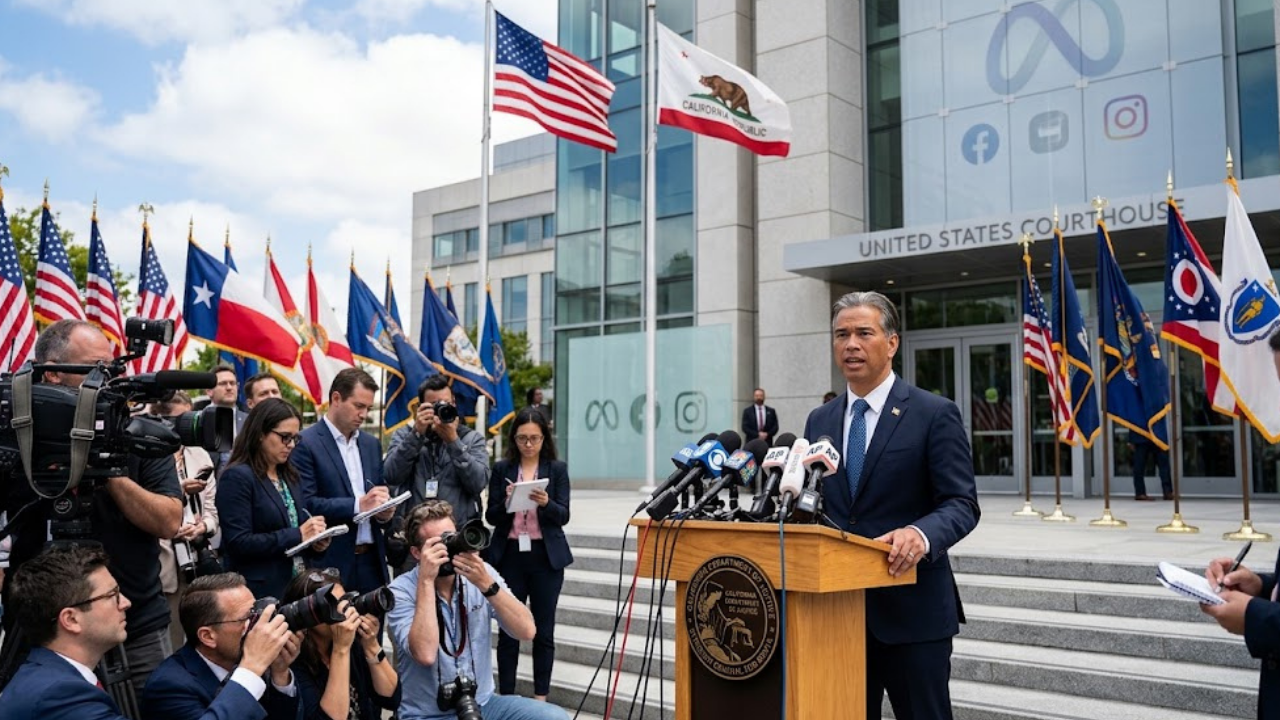
The Meta child safety settlement announced this week resolves one of the largest legal battles ever brought against a technology company over how it treats young users – and it comes with a price tag and a set of product changes that go further than anything Meta has agreed to before.
Meta Platforms agreed to pay up to $16.68 billion to resolve claims from 29 U.S. states that Facebook and Instagram were deliberately engineered to be addictive to children, that the company misled the public about the risks, and that it unlawfully collected personal data from children under 13. The agreement was disclosed in a court filing on Wednesday, ending a closely watched federal trial in Oakland, California, according to CNN’s coverage of the settlement, before Meta CEO Mark Zuckerberg was due to testify.
What the Meta Child Safety Settlement Actually Changes
The core of the Meta child safety settlement isn’t just the payout – it’s the new restrictions Meta must build into Facebook and Instagram for teenage users.Under the deal, teen accounts will default to a two-hour cumulative daily time limit across Meta’s apps. Time spent messaging or watching long-form video will not count toward that cap. Teen accounts will also face a nighttime access block, reported as running from midnight to 6 a.m., during which the apps lock unless a parent approves lifting the restriction.
Meta also agreed to strengthen its age-verification systems to keep younger children off its platforms, and to expand parental control tools that let guardians manage how their teens use the apps.
Perhaps the most unusual part of the Meta child safety settlement is a built-in incentive clause. Roughly $5 billion of the total is contingent on rival platforms – specifically TikTok and YouTube – adopting comparable restrictions. If they do, Meta’s own daily teen limit would tighten further, dropping from two hours to just 60 minutes per app, and the nighttime lockout would widen to 10 p.m. through 7 a.m. Meta’s chief legal officer, C.J. Mahoney, used the announcement to publicly press competitors to match the new framework, arguing that because teenagers move across many apps at once, an industry-wide standard is needed rather than a single-company fix.
How the Money Breaks Down
Reporting on the exact size of the Meta child safety settlement has varied slightly by outlet, largely because different figures cover different scopes – the 29-state coalition alone versus the total including separate settlements with other states and territories.
According to court filings, about $12.1 billion to $12.7 billion of the settlement is guaranteed and payable to states over 10 years, with California alone set to receive roughly $2.2 billion. The remaining portion, up to roughly $5 billion, is the contingent amount tied to whether TikTok and YouTube adopt similar teen-safety measures. Some outlets have reported the broader total – including settlements with additional states and territories beyond the original 29-state coalition – at just over $17 billion, and as high as $18 billion when combined with separate youth-safety spending commitments Meta has agreed to over the next decade.
Meta expects to record a legal expense of roughly $10 billion in its third-quarter 2026 results tied to the settlement, though the company said its broader financial guidance for the year remains unchanged, Fox Business reported. Meta’s stock rose in the days following the announcement, as investors reacted positively to the trial ending without a court judgment or ongoing litigation risk.
For context on the scale of what was at stake: Meta’s own pretrial filings had estimated its worst-case financial exposure at up to $1.4 trillion, while the states’ attorneys general had argued a more realistic penalty would land closer to $200 billion. The final settlement figure is a small fraction of either number, reflecting the incentives both sides had to avoid a prolonged jury trial.
The Allegations Behind the Case
The lawsuit at the center of the Meta child safety settlement was first filed in 2023 by a coalition of state attorneys general. It accused Meta of designing Facebook and Instagram features – including infinite scroll, push notifications and engagement-optimized recommendation algorithms – specifically to maximize the amount of time teenagers spent on the platforms, even when internal research reportedly showed harm to some young users’ mental health.
The states also alleged Meta violated the Children’s Online Privacy Protection Act, the federal law that bars platforms from collecting personal data on children under 13 without verified parental consent. Four of the states had additionally pursued their own state-level consumer protection claims, seeking both financial penalties and structural changes to how Meta’s platforms operate.
Meta has consistently denied wrongdoing, both before and after agreeing to the settlement. The company has argued it has already invested heavily in safety features for young users and previously described the states’ claims as unsubstantiated. As part of the settlement, Meta did not admit fault, which is standard in agreements reached before a final court judgment.Instagram head Adam Mosseri was called to testify during the trial before the settlement was reached. Zuckerberg’s own testimony, which had been expected later in the proceedings, will no longer be required now that the case has resolved.
What Comes Next Under the Meta Child Safety Settlement
Compliance with the Meta child safety settlement will be monitored for 10 years by an independent auditor, jointly selected by Meta and the participating states and paid for by the company. That structure is meant to give regulators ongoing visibility into whether Meta actually implements the promised changes, rather than relying on the company to self-report.
California Attorney General Rob Bonta, one of the officials who led the case, described the outcome as delivering real, enforceable protections for children rather than voluntary promises. North Carolina Attorney General Jeff Jackson separately called it the largest settlement of its kind reached with a major technology company.
For American families, the practical effect will show up gradually as Meta rolls the new defaults out to teen accounts on Facebook and Instagram. Parents will gain more visibility and control over how much time their teenagers spend on the apps and when they can access them overnight, though – as with most default settings – determined users may still find ways around the restrictions unless enforcement holds up over time.
The case is also likely to serve as a reference point for future action against other platforms. With Meta’s settlement explicitly built to expand if TikTok and YouTube follow suit, the coming months should show whether other major social platforms are willing to accept similar restrictions voluntarily, or whether states pursue separate litigation to compel the same outcome.
More from SultanNetwork: Nepal Flash Flood 2026 – our coverage of the glacial-collapse disaster on the Nepal-Tibet border, a separate breaking story from this week.
2 thoughts on “Meta Child Safety Settlement: $16.68B Deal Explained”