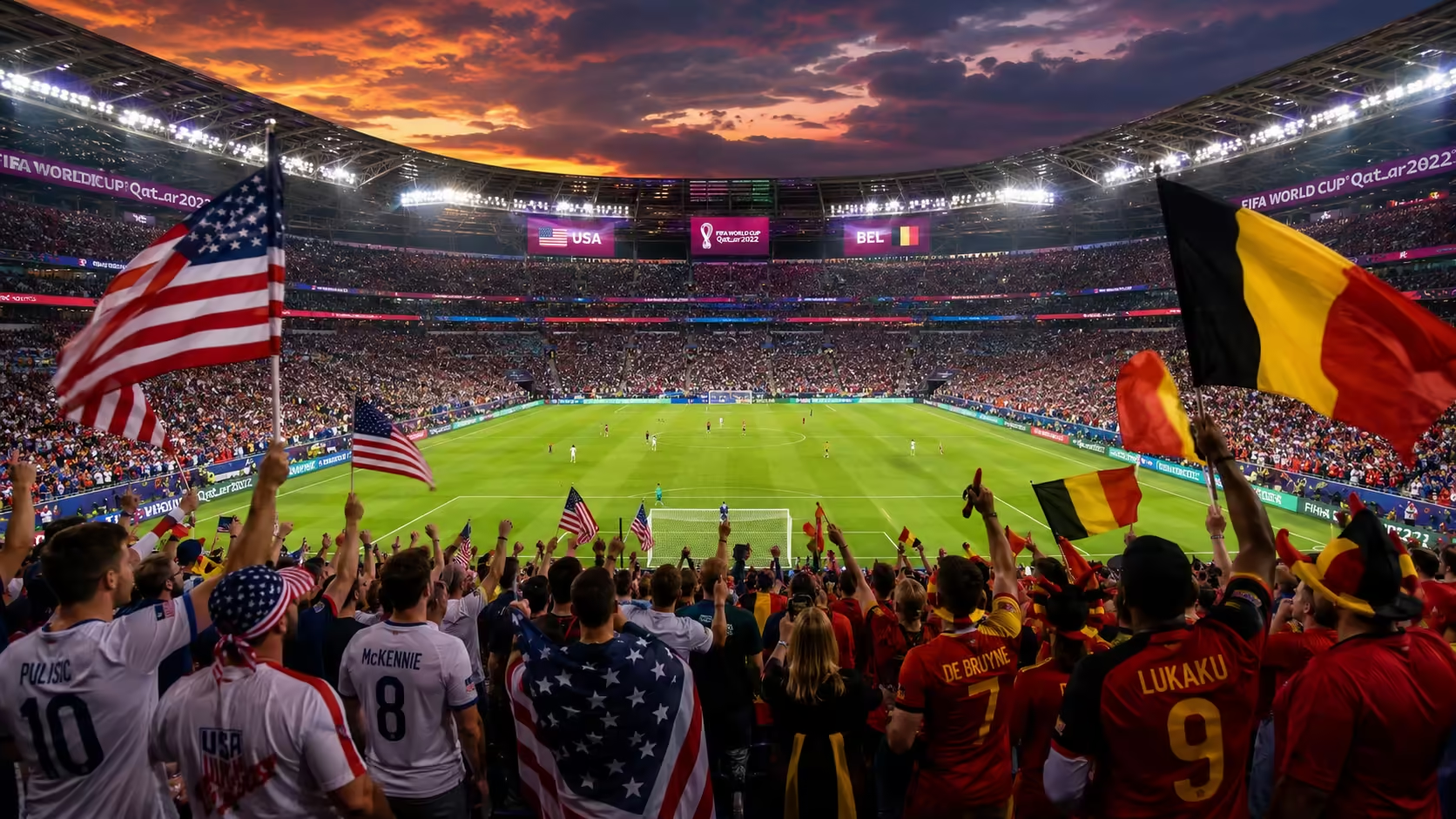



FIFA World Cup 2026 travel insurance is quickly becoming one of the most searched terms among fans planning to attend the biggest edition in the tournament’s history. The event runs from June 11 to July 19, 2026, across 16 host cities in the United States, Canada, and Mexico. With 48 teams and 104 matches on the schedule, millions of fans are already booking flights, hotels, and match tickets months in advance. But amid the excitement of planning the trip of a lifetime, one detail gets overlooked far too often: proper travel coverage.
For fans traveling from the UK, elsewhere in Europe, or even domestically within North America, choosing the right FIFA World Cup 2026 travel insurance matters more than most travelers realize – because a World Cup trip involves a level of financial exposure that a typical vacation simply doesn’t carry. Non-refundable tickets, expensive flights, and premium-priced accommodation all add up – and if something goes wrong, the losses can be significant. This guide breaks down exactly what US and Canadian visitors (and international fans traveling to North America) need to know before they buy a policy.
Why FIFA World Cup 2026 Is Unlike Any Trip You’ve Taken Before
Most vacations can be rescheduled if plans change. A World Cup trip cannot. Every element of the itinerary is tied to a fixed match date, a specific stadium, and a ticket that cannot be transferred or refunded once it has been allocated through FIFA’s official ticketing platform. That single fact changes the entire risk calculation for travelers.
Layer onto that the sheer scale of the event. With matches spread across three countries — the US, Canada, and Mexico — many fans are planning itineraries that involve multiple border crossings, connecting flights between host cities, and accommodation bookings made months in advance while demand (and prices) are still climbing. A single missed flight in this kind of itinerary doesn’t just delay one day of sightseeing; it can mean missing the match you built the entire trip around.
Add in the realities of a 48-team, 104-match tournament: unprecedented crowd sizes, strained public transit systems, surge pricing on rideshares, and hotel availability that tightens by the week. Government travel advisories from both the US State Department and the Government of Canada have already flagged this tournament as an event where travelers should take out proper coverage before departure, rather than relying on the basic protection bundled into a flight or hotel booking.
Why Standard Travel Insurance Won’t Cut It for World Cup Fans
A common mistake is clicking the “Add Travel Insurance” checkbox during flight or hotel checkout and assuming it’s enough. These bundled, low-cost add-ons are typically bare-bones policies built for ordinary vacations, not for a high-demand global sporting event.
The gaps tend to show up in three places. First, event ticket coverage – most basic policies exclude sports and concert tickets entirely, meaning a canceled trip could still leave you thousands of dollars out of pocket for tickets alone. Second, medical coverage limits are often far too low for treatment in the United States, where even routine care is billed at rates that can overwhelm a standard policy’s cap. Third, generic plans rarely include on-the-ground, multilingual support across three different countries, which matters enormously if an emergency happens in an unfamiliar city far from home.
Specialist or upgraded travel insurance plans built around major sporting events typically offer higher medical limits (some providers advertise coverage up to $8 million for the US market), dedicated event ticket protection as an add-on, and emergency evacuation benefits designed for large-crowd environments like packed stadiums and fan festivals. Before you travel, it’s worth comparing a specialist policy against whatever default option your airline or hotel offered – the difference in real protection can be substantial.
Medical Emergencies: The Biggest Risk for International Visitors
This is the single most important reason to buy proper coverage. None of the three host countries provide free healthcare to foreign visitors. In the United States specifically – home to 11 of the 16 venues, including stadiums in New York, Los Angeles, Miami, and Dallas – a single emergency room visit can average $2,600 to $3,000 for an uninsured visitor, before factoring in follow-up care, ambulance transport, or hospitalization.
The situation escalates quickly if an emergency medical evacuation becomes necessary. Both the US State Department and Canadian government advisories have specifically warned travelers that evacuation costs can run into the tens of thousands of dollars, and that many standard domestic health insurance plans – including US employer plans and Canadian provincial healthcare – do not extend coverage once you cross into another country, even from Canada to the US or vice versa.
This is why insurance providers built for major events emphasize a strong medical component: high per-incident limits, direct billing arrangements with hospitals where possible, and telehealth access so travelers can get guidance quickly instead of waiting in an overcrowded emergency room during peak tournament weeks. If you’re only going to prioritize one part of your policy, prioritize the medical and evacuation coverage first.
Trip Cancellation & Non-Refundable Match Tickets: What’s Covered
Once a match ticket is purchased through FIFA’s official platform, all sales are final. There is no cancellation, exchange, or refund option through FIFA itself, aside from a specific policy for Team Specific Tickets where the associated team is eliminated early (minus a small retention fee). That makes trip cancellation insurance one of the more valuable pieces of a World Cup policy.
Standard trip cancellation coverage reimburses non-refundable prepaid expenses – tickets, flights, and accommodation – if you have to cancel for a covered reason, which typically includes sudden illness, injury, a death in the family, or certain unavoidable emergencies. It’s important to actually read the list of “covered reasons” in any policy you’re considering, since insurers vary in what qualifies.
FIFA also offers its own Ticket Protection add-on at the point of purchase, which the organization “strongly recommends.” This is separate from a personal travel insurance policy and generally only covers ticket cost, not flights, hotels, or medical expenses – so most fans will still want a broader travel policy layered on top rather than relying on the FIFA add-on alone.
Cancel For Any Reason (CFAR): Is It Worth the Extra Cost
Standard trip cancellation insurance only pays out for a defined list of covered reasons. Cancel For Any Reason coverage is an upgrade that extends protection to, quite literally, any reason at all – a work conflict, a change of heart, or simply deciding the trip is no longer feasible. In exchange, CFAR typically reimburses 50% to 75% of your prepaid, non-refundable costs rather than the full amount.
This add-on tends to make the most sense for fans with unpredictable schedules, those attending multiple matches across different cities (and therefore juggling several non-refundable bookings), and international travelers flying in from outside North America on complex, multi-leg itineraries where more things can go wrong.
The one detail that trips people up: CFAR coverage almost always has to be purchased within a narrow window – typically 14 to 21 days of your first trip payment (the deposit on your ticket, flight, or hotel). If you wait until closer to the tournament to shop for insurance, you may find that CFAR is no longer available to you, even if you’re willing to pay for it. If there’s any chance your plans could change, this is not a decision to postpone.
Flight Delays, Missed Connections, and Baggage Protection
With millions of fans funneling through a relatively small number of major airports – Atlanta, Toronto, Mexico City, Dallas, and New York/New Jersey among them – flight disruption is close to inevitable for a meaningful share of travelers. Airports and connecting hubs are expected to operate at or near peak capacity throughout the tournament window.
Flight delay insurance reimburses reasonable expenses like meals, an unplanned hotel night, or ground transport when a delay stretches on for hours. Flight cancellation coverage goes a step further, protecting you if your entire itinerary has to be rebuilt on short notice – which matters enormously when a missed connection could mean missing kickoff entirely.
Baggage protection is worth equal attention. When airport systems are pushed past normal capacity, lost, delayed, or damaged luggage becomes far more common. Most policies cover baggage losses in the range of $1,000 to $2,500, which typically includes electronics – a meaningful cushion if a bag carrying your phone, camera, or match-day essentials doesn’t arrive with you.
Crossing Three Borders: Insurance Considerations for US, Canada & Mexico
Because this tournament spans three sovereign nations, your itinerary can quickly become what some travel advisors call a “triple-border tightrope.” Entry requirements, visa rules, and even what counts as valid identification differ between the US, Canada, and Mexico – and there is no unified fan visa or fast-track entry program for this tournament, unlike some past World Cups.
Before buying insurance, make sure your entry documentation is sorted first. Passport validity requirements, visa applications, and any electronic travel authorizations should be confirmed well ahead of time through each host country’s official embassy or consulate – insurance cannot fix a border denial.
Once documentation is settled, check whether your travel insurance policy provides consistent coverage across all three countries you plan to visit, rather than just your point of entry. Some lower-cost policies are written primarily around a single destination and may offer reduced protection – or none at all – once you cross into a second or third country on the same trip. If your itinerary includes matches in more than one host nation, confirm this explicitly with your provider before you buy.
Heat Waves, Crowds, and Other Host City Health Risks
The tournament falls squarely in the Northern Hemisphere summer, and forecasts point to intense heat in several host cities, particularly Dallas, Houston, and parts of Mexico. Heat-related illness is a genuine medical risk for fans standing in un-shaded fan zones or walking long distances between transit stops and stadiums, and it’s exactly the kind of incident a solid medical policy is designed to cover.
Beyond heat, the sheer density of crowds at fan festivals, public viewing areas, and transit hubs introduces its own risks – from minor injuries in crowded spaces to the logistical challenge of getting urgent care quickly when a stadium or fan zone is operating at full capacity. This is where emergency evacuation coverage becomes relevant even for incidents that aren’t life-threatening; getting a traveler out of a packed venue to proper medical care can itself be complicated and costly.
Practical precautions matter alongside insurance: staying hydrated, using sun protection, and knowing the location of medical tents at major venues. But coverage that includes solid medical treatment limits and evacuation support gives you a real safety net if a hot afternoon in a crowded fan zone turns into something more serious.
How Much Does World Cup Travel Insurance Cost and When to Buy It
Pricing varies by provider, trip cost, traveler age, and the level of coverage selected, but as a general rule, comprehensive travel insurance typically runs 4% to 8% of your total prepaid trip cost – tickets, flights, and accommodation combined. For a fan spending $3,000 to $5,000 on a group-stage trip, that translates to a policy cost of roughly $150 to $400, a relatively small price against the potential losses if something goes wrong.
Timing matters more for this event than for a typical vacation. Buying insurance immediately after your first payment – rather than waiting until closer to departure – unlocks time-sensitive benefits like CFAR coverage and often provides broader protection for pre-existing conditions. Waiting too long can also mean missing coverage windows entirely if unexpected news emerges closer to the tournament, since most insurers won’t sell cancellation coverage for a risk that’s already publicly known.
As a rule of thumb: buy your policy within one to three weeks of your first non-refundable payment, whether that’s the match ticket deposit, the flight booking, or the hotel reservation – whichever comes first.
Choosing the Right Policy: A Checklist for US and Canadian Fans
Before finalizing a plan, run through a short checklist rather than accepting the first quote you see. Confirm the policy includes event ticket protection as either a built-in benefit or an available add-on, since this is one of the most commonly excluded items in generic travel plans. Verify the medical coverage limit is high enough for US healthcare costs specifically, along with a dedicated emergency evacuation benefit.
Check that coverage applies across every country on your itinerary, not just your first destination, if you’re planning to follow your team across borders. Look for flight delay and cancellation benefits with a reasonable reimbursement threshold, plus baggage protection that covers electronics.
Finally, read the list of covered cancellation reasons carefully, and decide whether a CFAR upgrade is worth the added cost given how flexible your plans really are. A little time spent comparing two or three specialist providers against a generic add-on policy is usually enough to reveal a meaningful gap in protection – and for a trip this expensive and this once-in-a-lifetime, that gap is not one worth risking.